For product managers in the AI era
Product just got harder,but not for everyone.
Some product managers already have AI doing all the repetitive work while they focus on the decisions. You can be one of them.
AI built into how you already run product, working the way you think. The gap isn't as large as it looks, but it's growing fast.
How AI-native are you? Find out in 4 minutes.

Marton Gaspar, product coach

10 years in AI
3 startups of my own
100+ product leaders coached
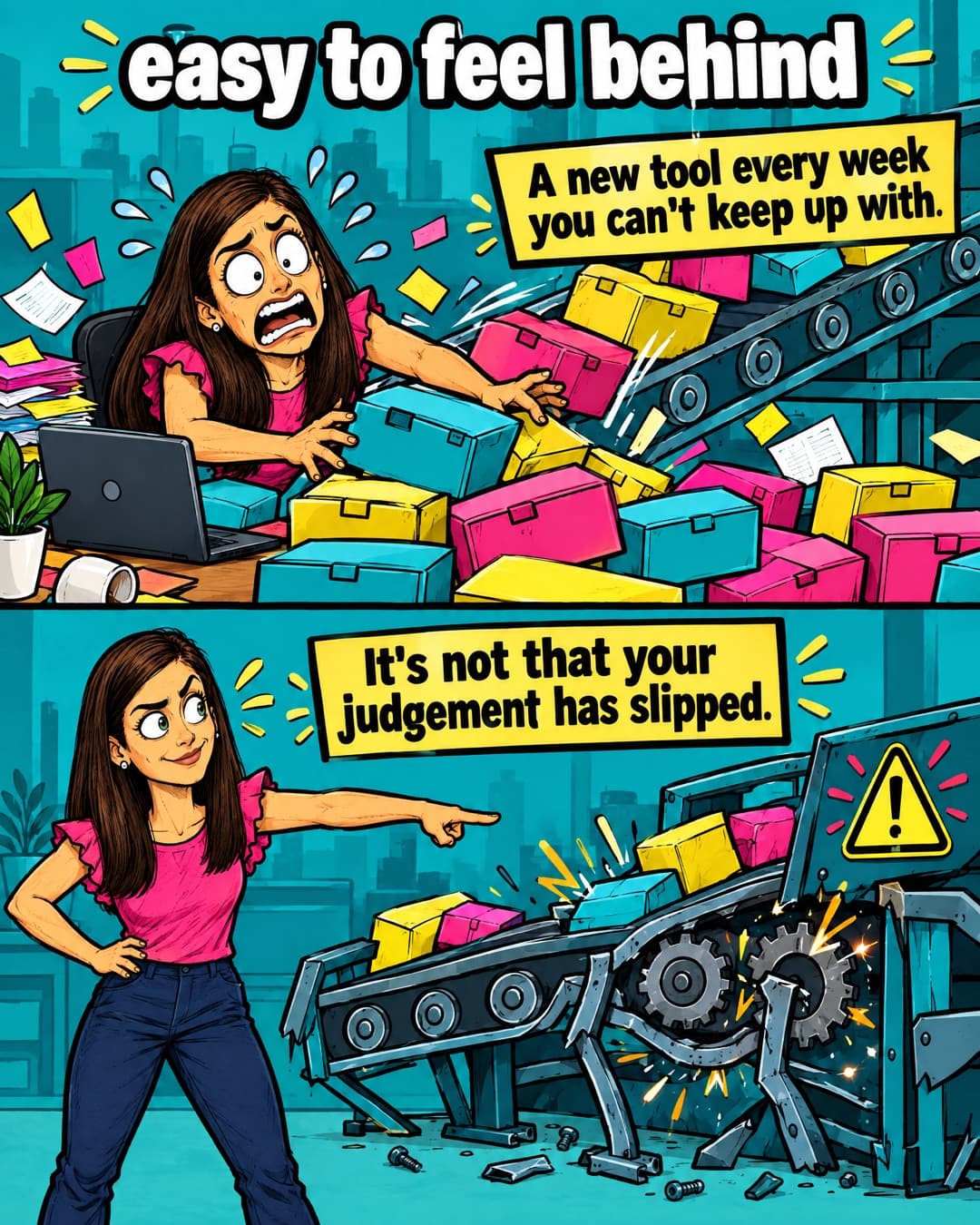
When everything moves this fast, it's easy to feel behind.
Product management changed more in the last year than in the ten before it.
The tools change every week. The expectations moved overnight. So you work harder, and still feel a step behind.
It's not that your judgement has slipped. It's an operating model that stopped working the moment AI sped everything up.
And that gap is only going to grow.
Do any of these sound familiar?
- A new tool every week you can't keep up with
- Afraid to switch off, in case you fall further behind
- Working harder with AI, and somehow more tired, not more ahead
- No spare time to learn AI on nights and weekends
- The nagging sense your experience is worth less than it was
- Tried the AI tools, got slop, went back to doing it yourself
- Second-guessing whether you're still good at this
Not another AI course.
Not a prompt pack.
Not a certification.
The fix isn't more demos, more tools, or more tips.
It's AI integrated into your real work, on your own product, with your own team.
You've read enough. You learn this by building it on real product work, and I'm in it with you the whole way.

This is what ahead looks like.
Keeping up was never the goal. With AI running the repetitive work, drafting PRDs, building prototypes, standing up experiments, you keep the part only you can do: the decisions and the creative work that make you irreplaceable. When a new model drops next month, none of it resets. You can turn any idea into a working prototype, get a real answer in days instead of quarters, and catch what's wrong before it ships. Here's what changes once it runs.
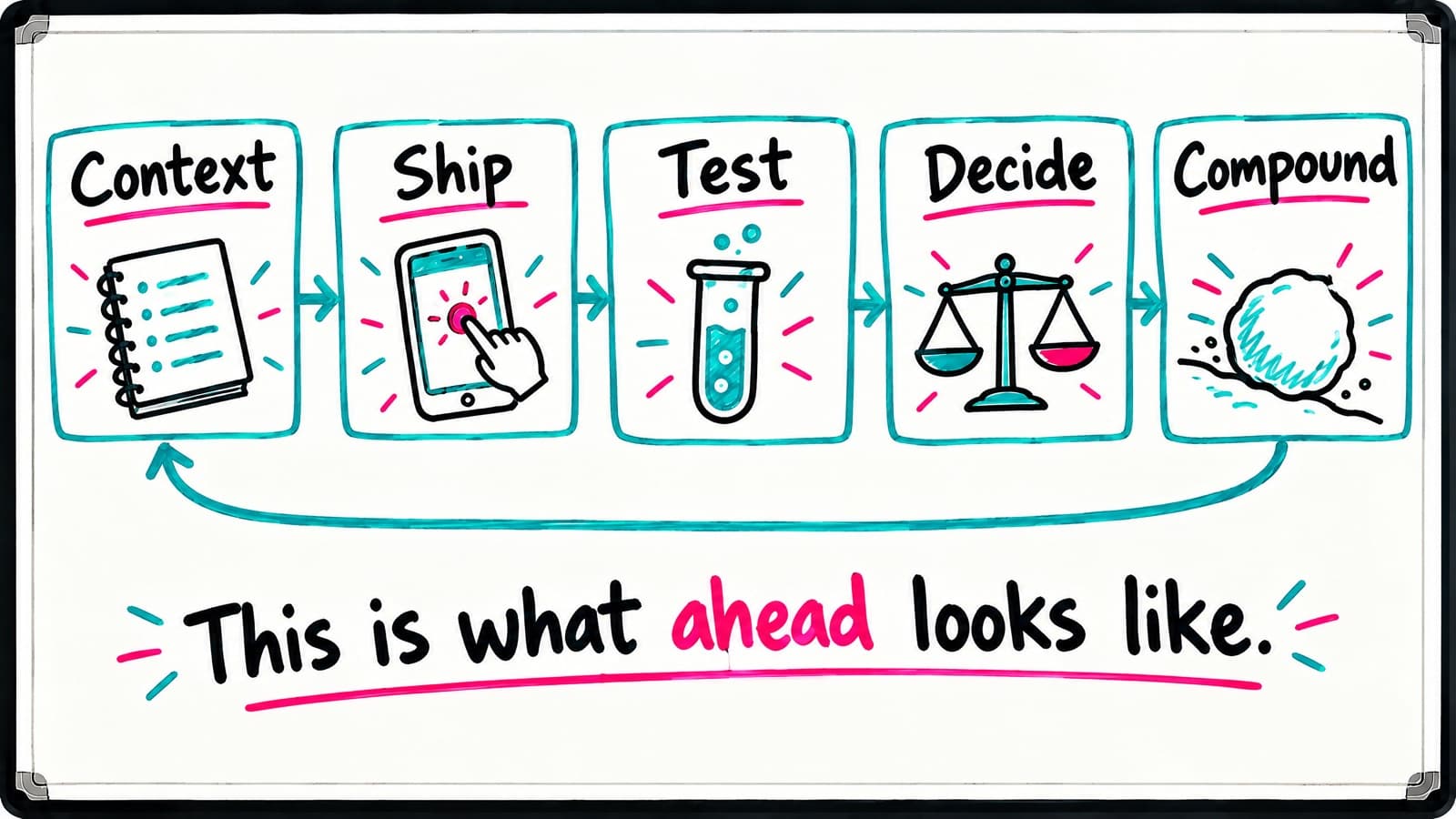
- 1
Context
Better answers every time, because your context travels.
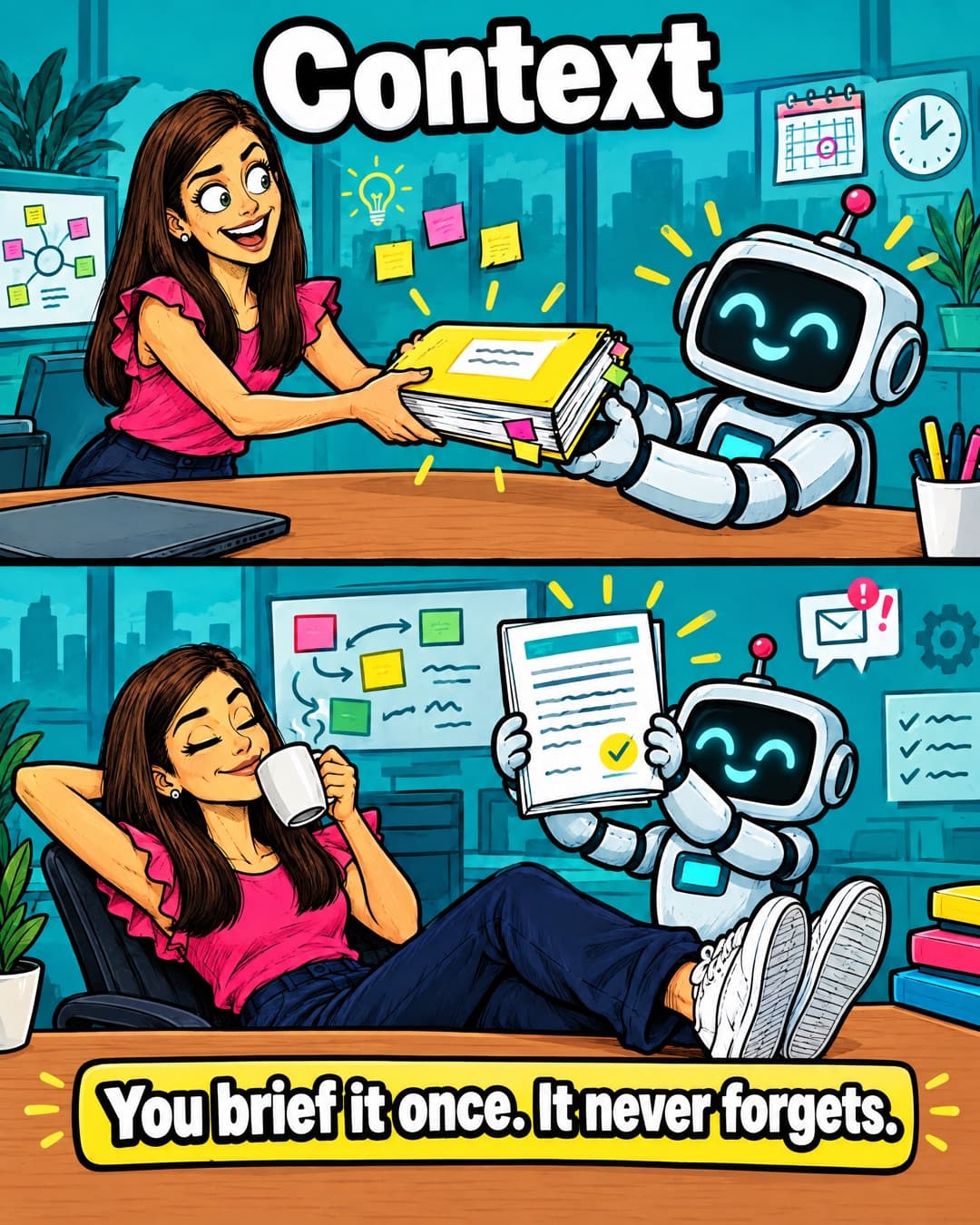
The system already knows your product, your users, and your bar for good. So the PRD, the teardown, the release notes come back as first drafts you edit, not blank pages you start from. You brief it once instead of re-explaining yourself every time, and the answers only get better the more it knows you.
You brief it once. It never forgets.
- 2
Ship
Walk into the review with a working prototype.
You build a clickable prototype of the feature the night before the review, not a deck describing it. The room stops debating and starts reacting to something real.
A prototype ends the argument a slide starts.

- 3
Test
Answer your riskiest assumption this week.
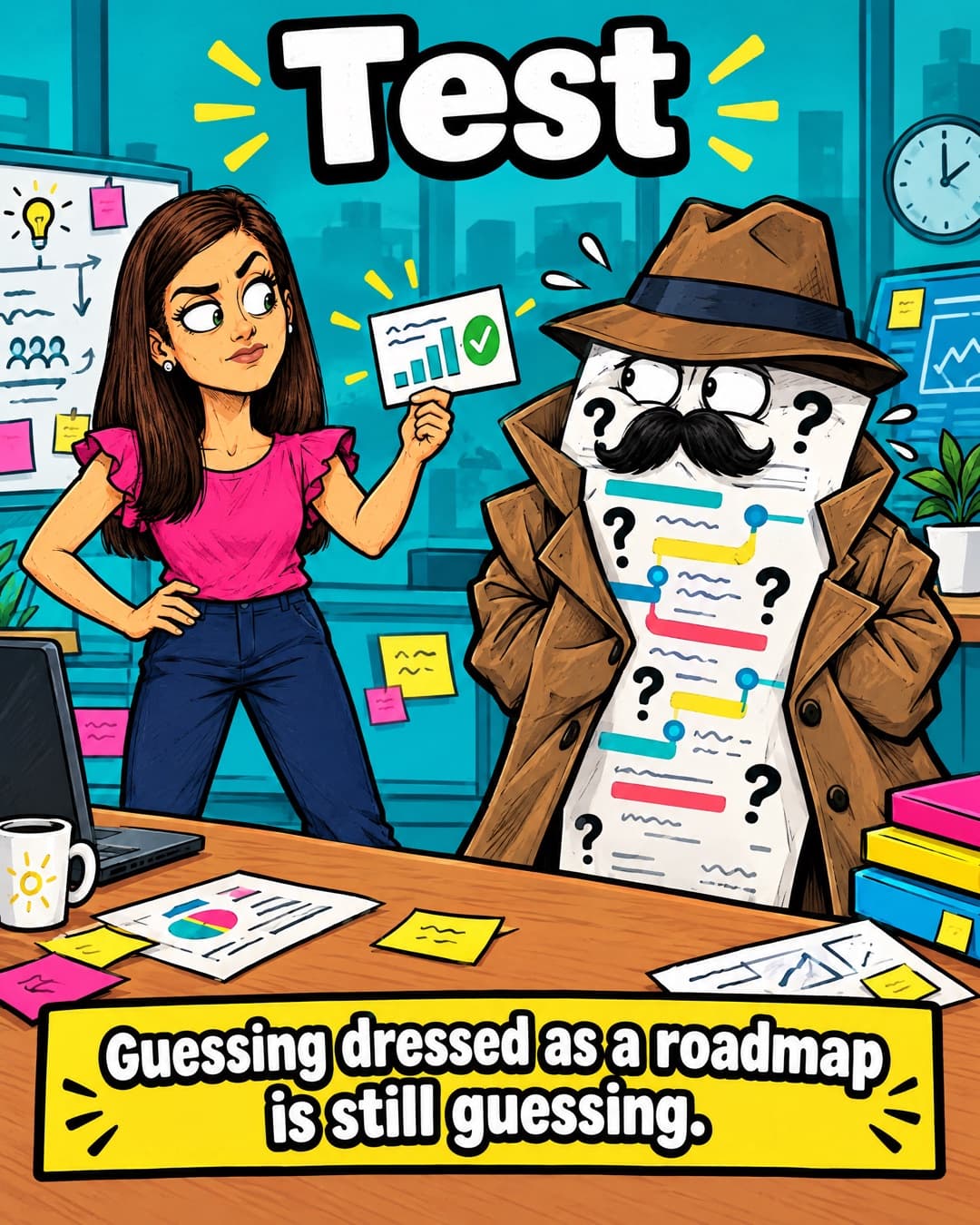
Spin up a fake door, an instrumented prototype, or five user sessions off a prompt chain. The question that would have sat in a quarterly bet gets a number by Friday.
Guessing dressed as a roadmap is still guessing.
- 4
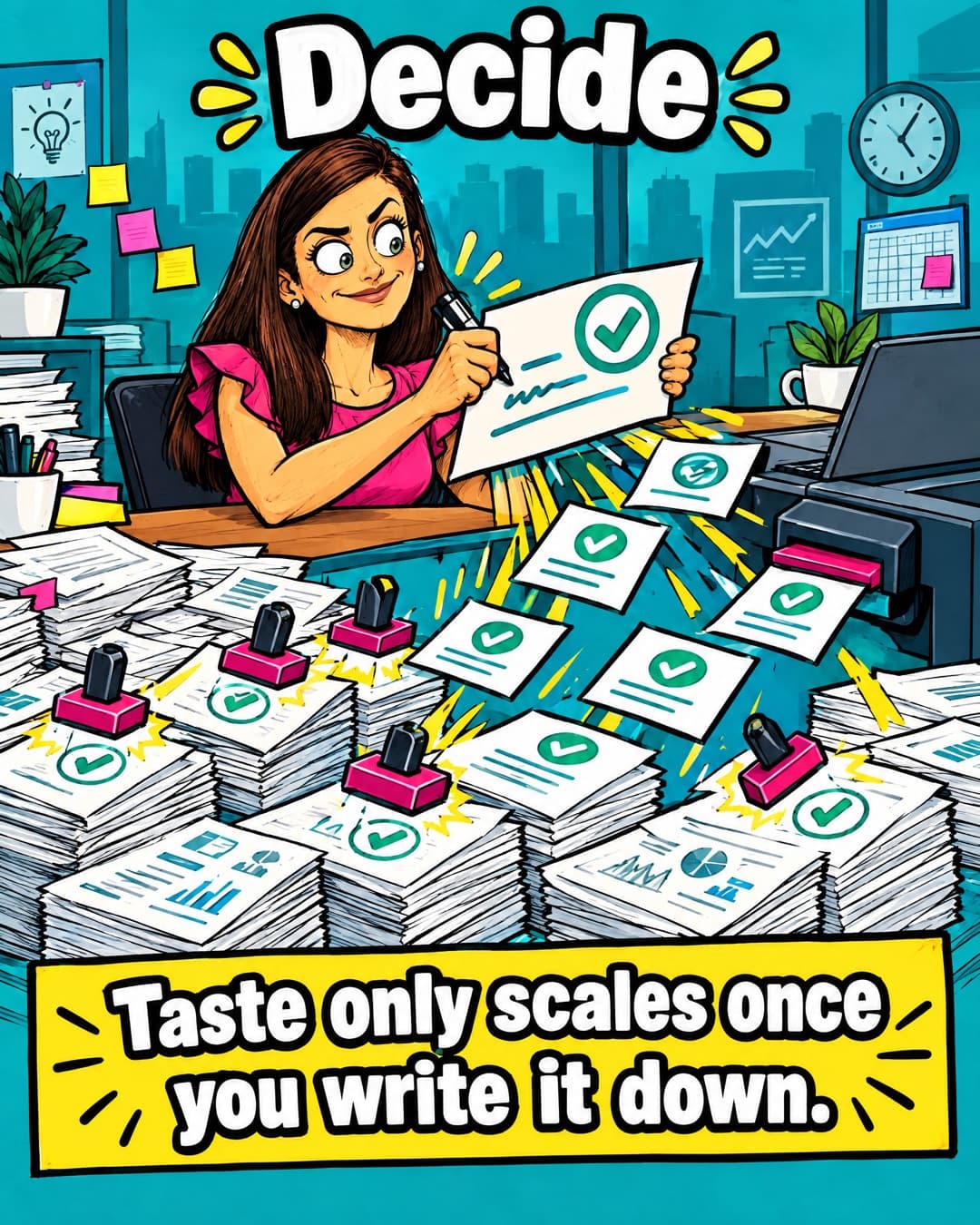
Decide
Your taste, working before you sit down.
You write your judgment down once: how you size, what you kill, what good looks like. The system applies it to every PRD and analysis before it reaches you. You edit, you never start blank.
Taste only scales once you write it down.
- 5
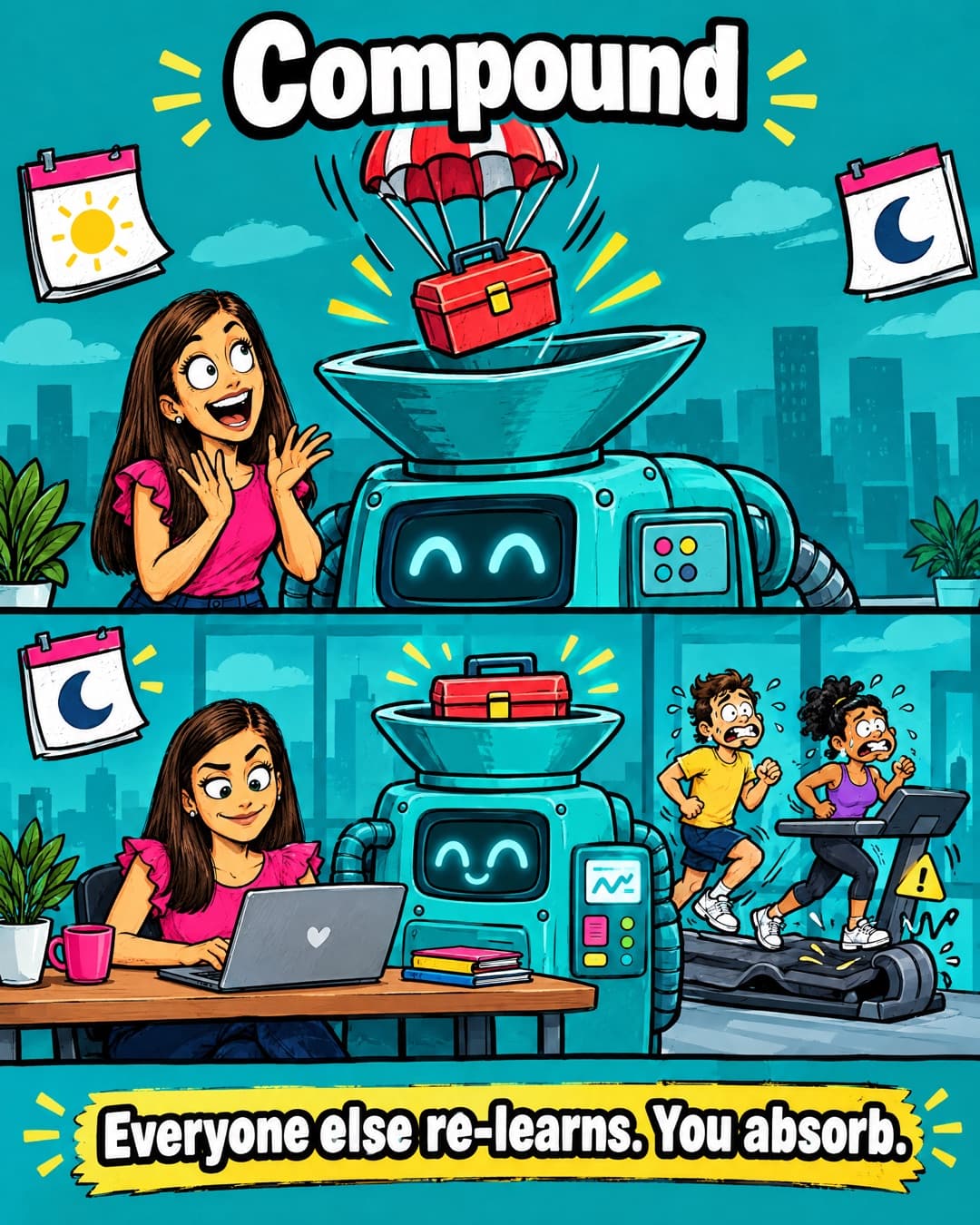
Compound
Never start from zero on a new tool again.
A new model drops on Tuesday and you're using it by Wednesday, because it fits the way you already work. You never rebuild from scratch. Whatever comes next, a new model, a new tool, a new way of working, you add it to your workflow and start using it straight away.
Everyone else re-learns. You absorb.
Want to see where you stand today? Your AI-Native PM Score shows you in four minutes. Get your score →
“In the one year I've worked with Marton, he has led the company into the age of modern product development, transforming the company to one that measures its success by outcomes, not outputs. … By coaching far beyond his immediate team and instilling a growth mindset, he made our product teams more agile, and set me up for a promotion in the last review cycle.”
Alexandra Heimiller
Product Director, HomeX
Direct report at HomeX
What lands in your inbox
One note a week. Built to be used.
01
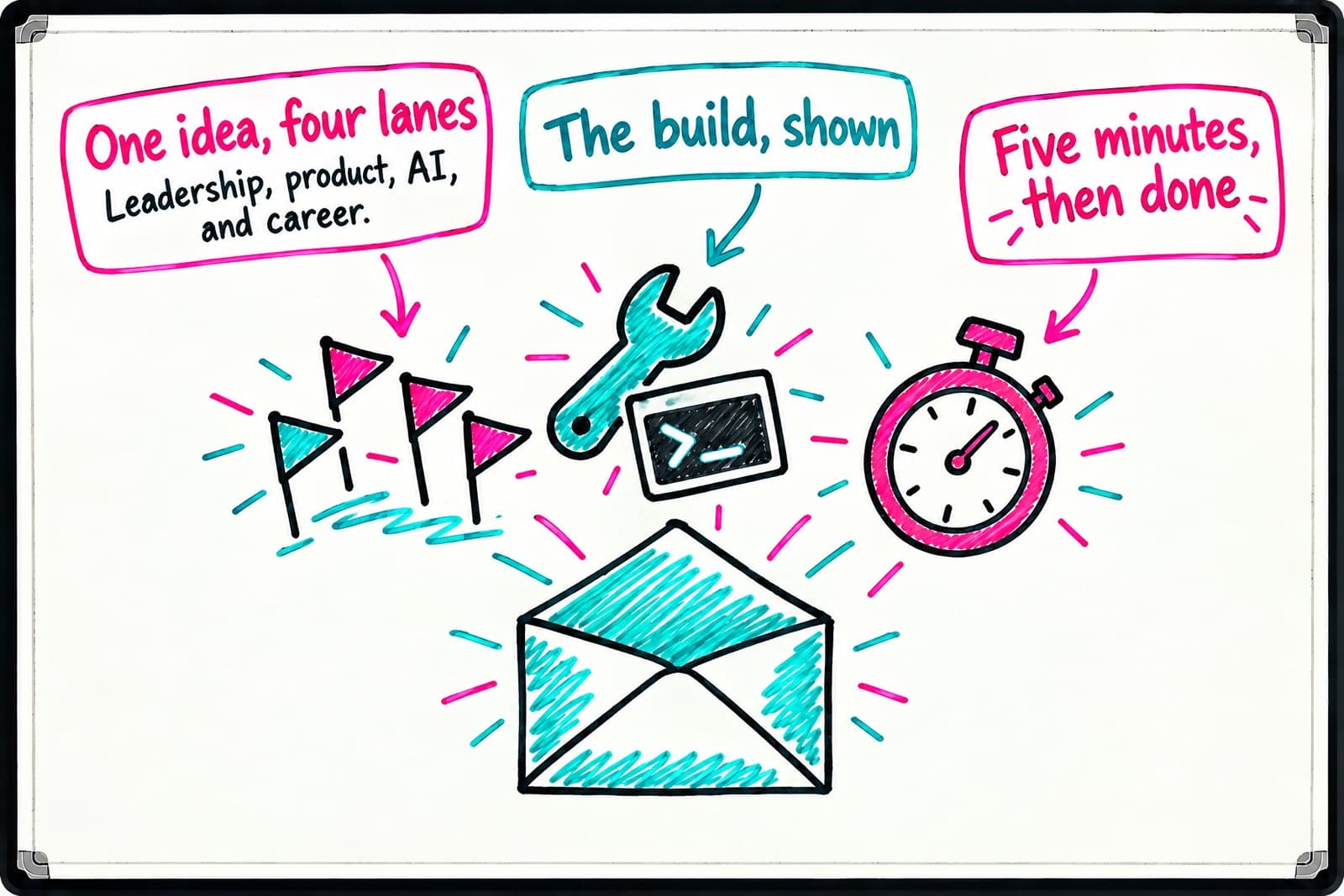
One idea, four lanes
Leadership, product, AI, and career. The thinking a senior PM actually uses at work, rotated one lane at a time.
02
The build, shown
The prompts, workflows, and AI systems I run on real product work. Not theory. Things you can copy on Monday.
03
Five minutes, then done
Short enough to read on a break. Concrete enough to use the same week. No filler, no hype.
The Product System · weekly
Every week, one piece of your system.
One idea across leadership, product, AI, and career, rotated one lane at a time. The actual skills and workflows I run on real product work, ready for you to make your own. Read it in five minutes, use it the same week.

“really useful and practical” Anna Kurochkina, Product Director, Innovation Hive at EY
Resources
Free tools you can use this week.
Frameworks, infographics, and tools for real product work, on leadership, product, AI, and career. Take what you need.
Stakeholder management
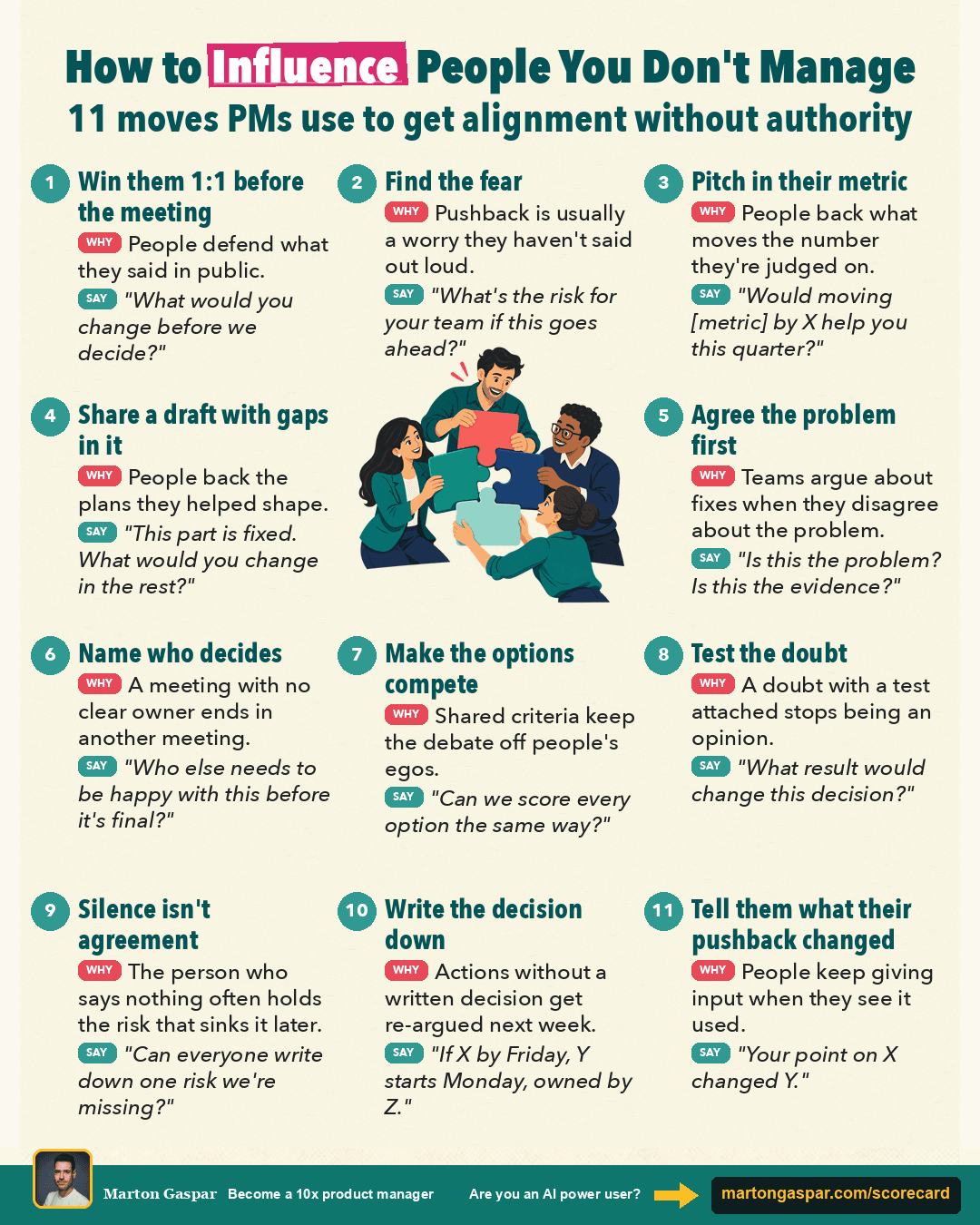
Influence Without Authority: 11 Moves Product Managers Use to Get Alignment
Influence without authority for product managers: 11 moves to win alignment with people you don't manage, each with why it works and a line you can say.
Get the PDF →
 FREE PDF
Career development
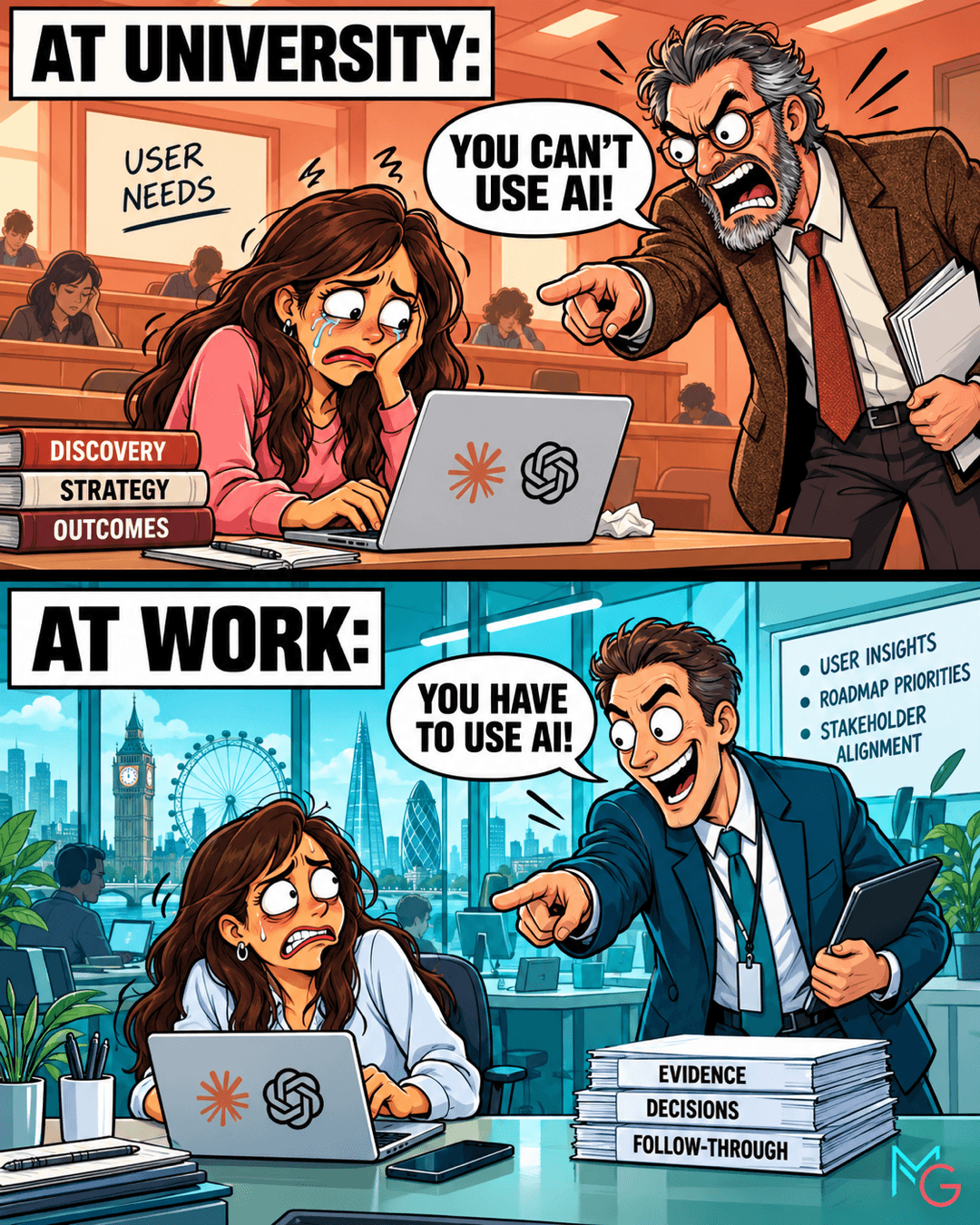
Product Manager Judgement and AI: 5 Questions to Answer Before Your Work Reaches the Team
AI makes product work look finished before the thinking is. Five questions to check your judgement before an AI-assisted PRD or roadmap reaches your team.
Get the PDF →
 FREE PDF
Stakeholder management
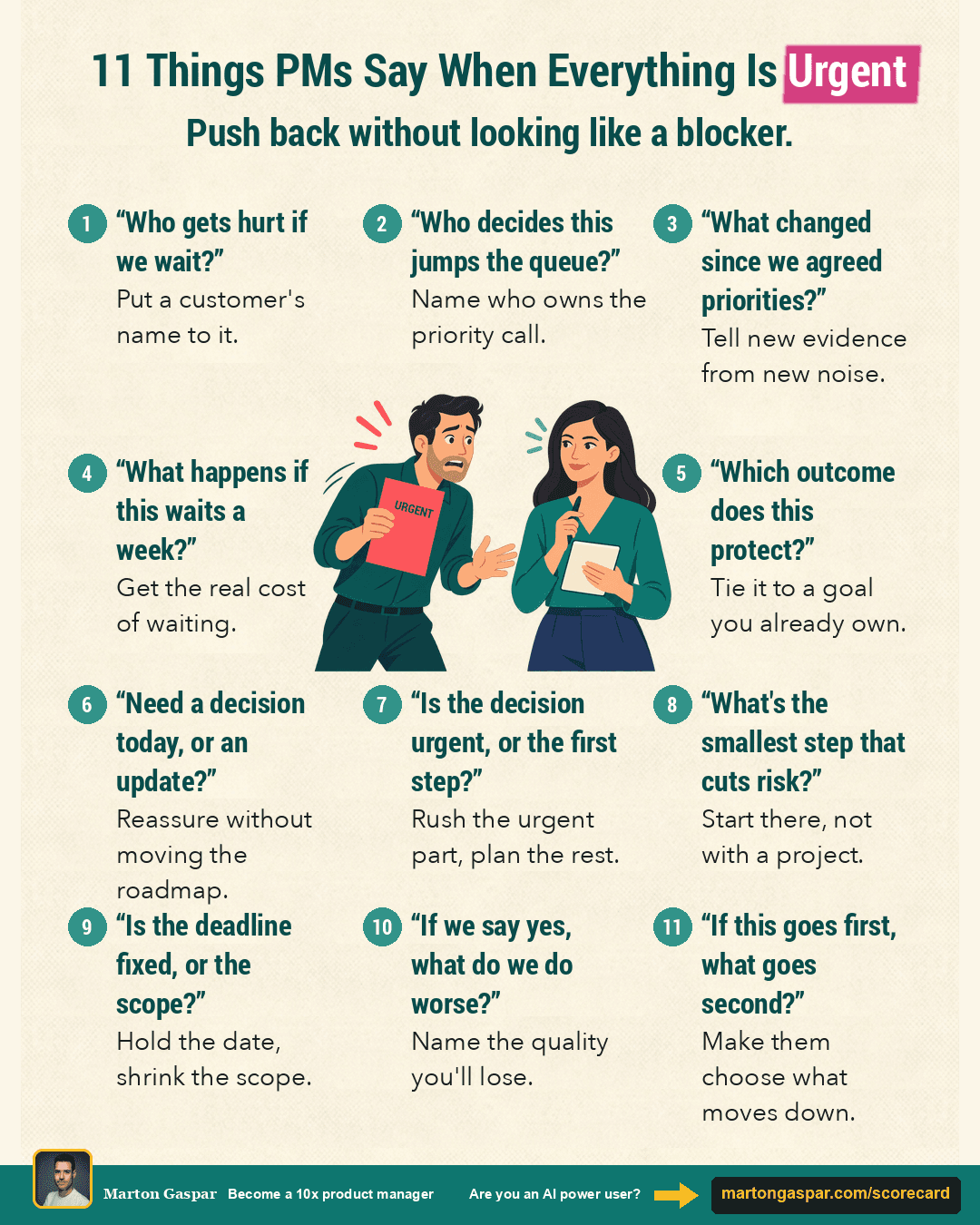
How to Push Back on Urgent Requests (11 Questions Product Managers Ask When Everything Is Urgent)
Eleven questions that sort real urgency from false urgency, so you can push back on urgent asks without looking like the blocker.
Get the PDF →
 FREE PDF
The AI-Native PM Score
Nineteen questions, scored, with a personal report in your inbox.
The reading list
Thirty-six books shelved by the twelve jobs of product management.
Coming soon
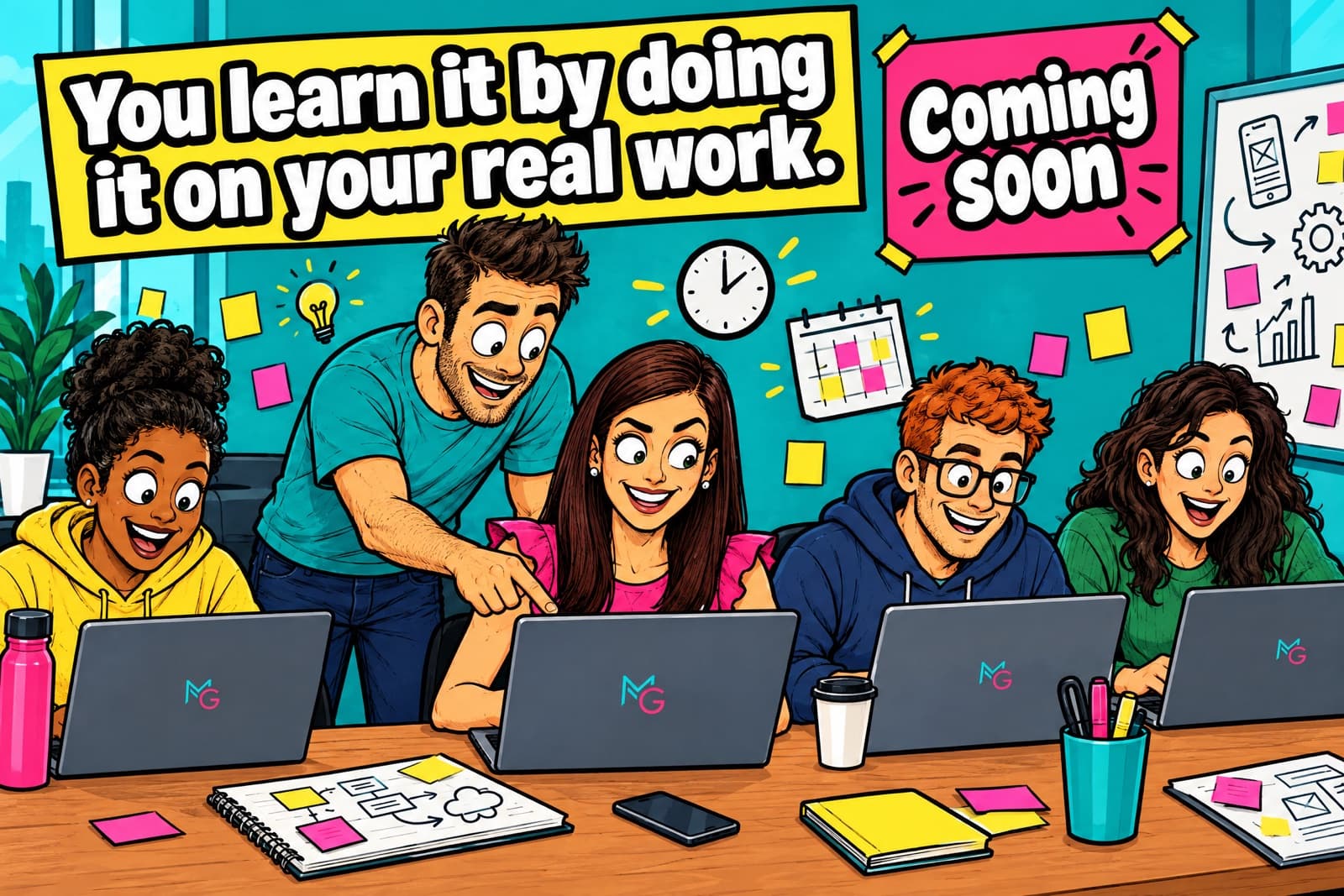
A cohort for product managers who want to build with AI, from zero to expert in weeks.
I'm building a course on how to make AI part of how you run product. You learn it by doing it on your real work. That's the only way it lasts. Join the waiting list and you'll be first to know, at the best price.
Who writes it
I'm Marton.
I lead product, and I build systems.
Ten years in AI, from chatbots to natural-language generation to AI strategy. Director of Product at a Series A scale-up. Three startups of my own. I've coached over 100 product leaders at organisations like the NHS and EY.
I'm not an AI advisor. I'm a product leader who runs AI on his own product work every day, and shows you how to make it part of yours.
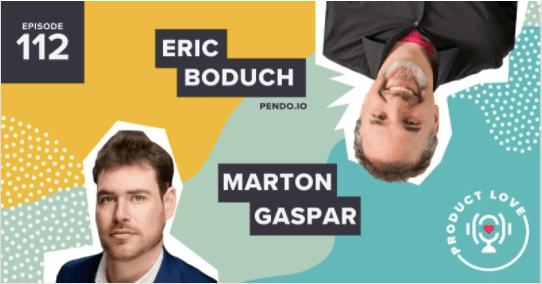
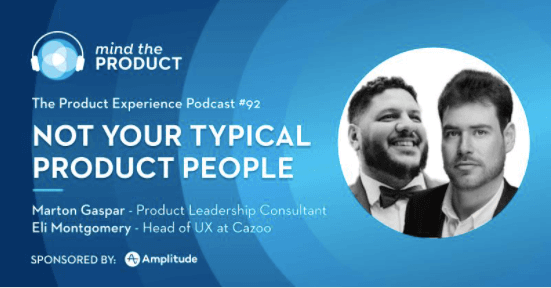
Podcasts that had me on.
Stages I've spoken on.






Stop chasing tools.
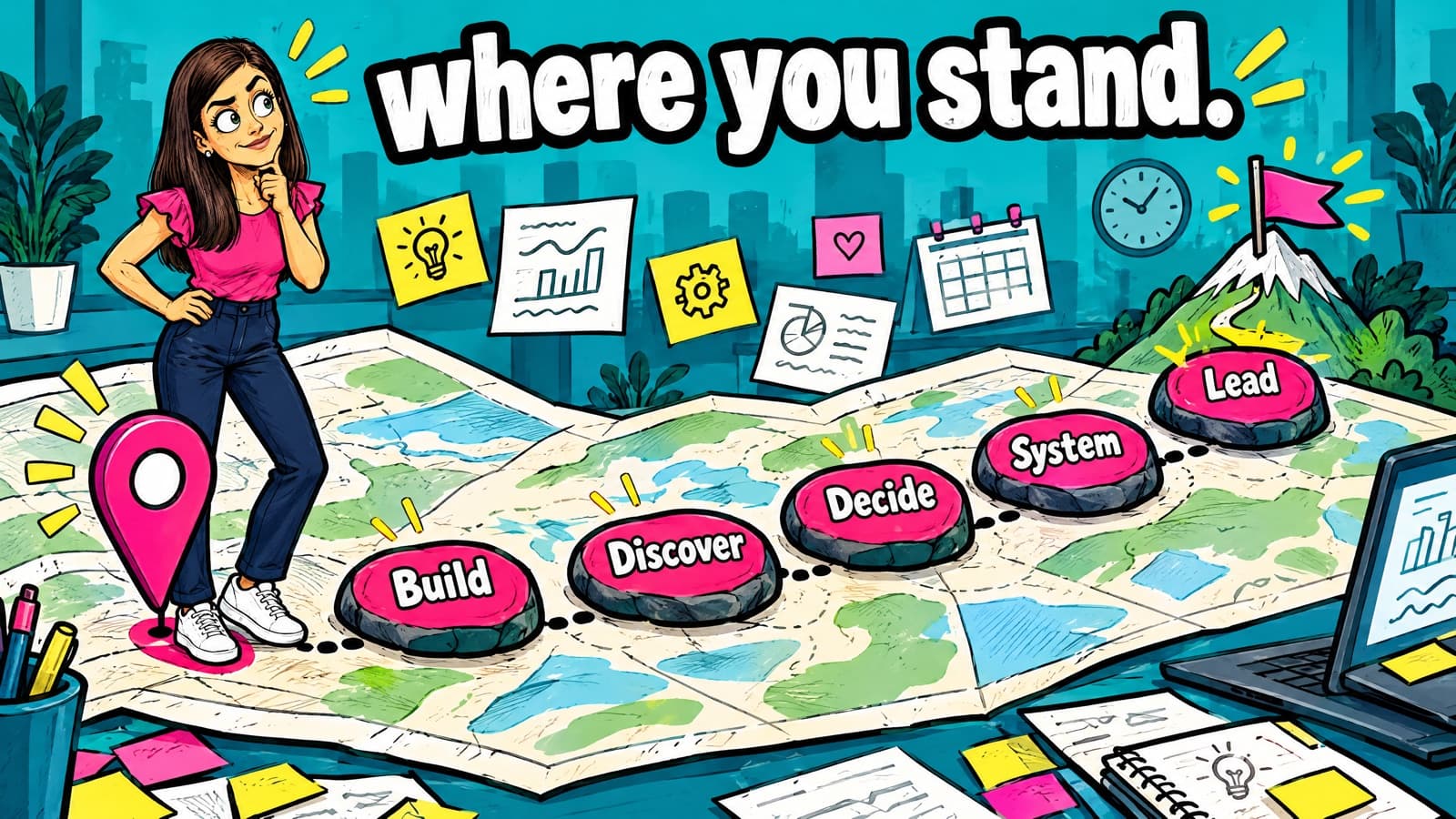
Start by seeing where you stand.
Four minutes. Your score, your one big gap, and the first move to make this week.
Get your score →