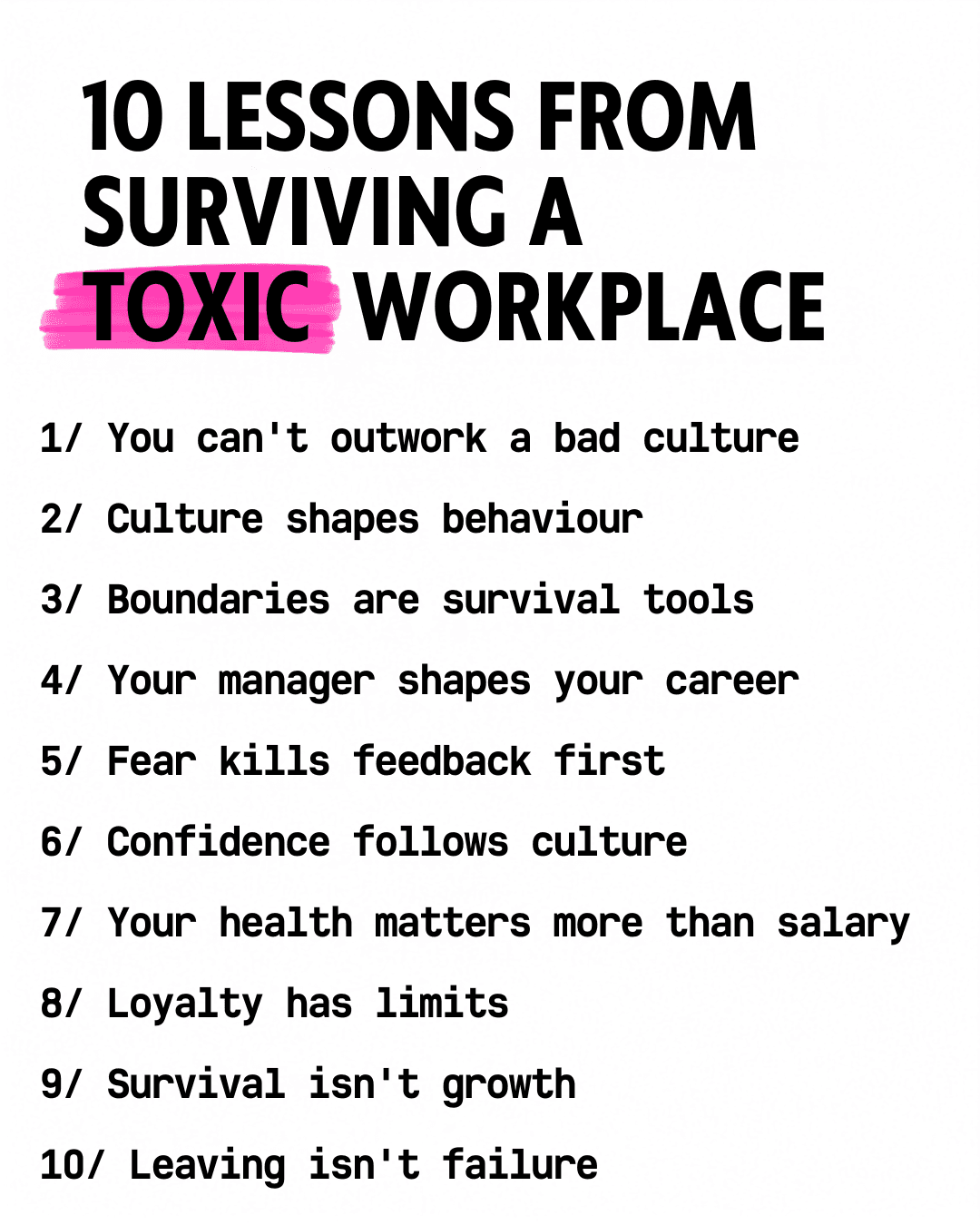

The most expensive career mistake you can make is staying at the same job too long.
Nobody stays in a toxic job because they're weak. People stay out of loyalty, or because one more push might fix it. Those are decent reasons. The cost is that every month spent surviving is a month not spent growing, and that bill arrives later.
Here are my ten lessons on how you know when to leave a toxic workplace. Each one comes with a question to ask yourself and a plain answer. Read them as a self-check, not a verdict. The point is to see your situation clearly, then choose on purpose.
You can't outwork a bad culture
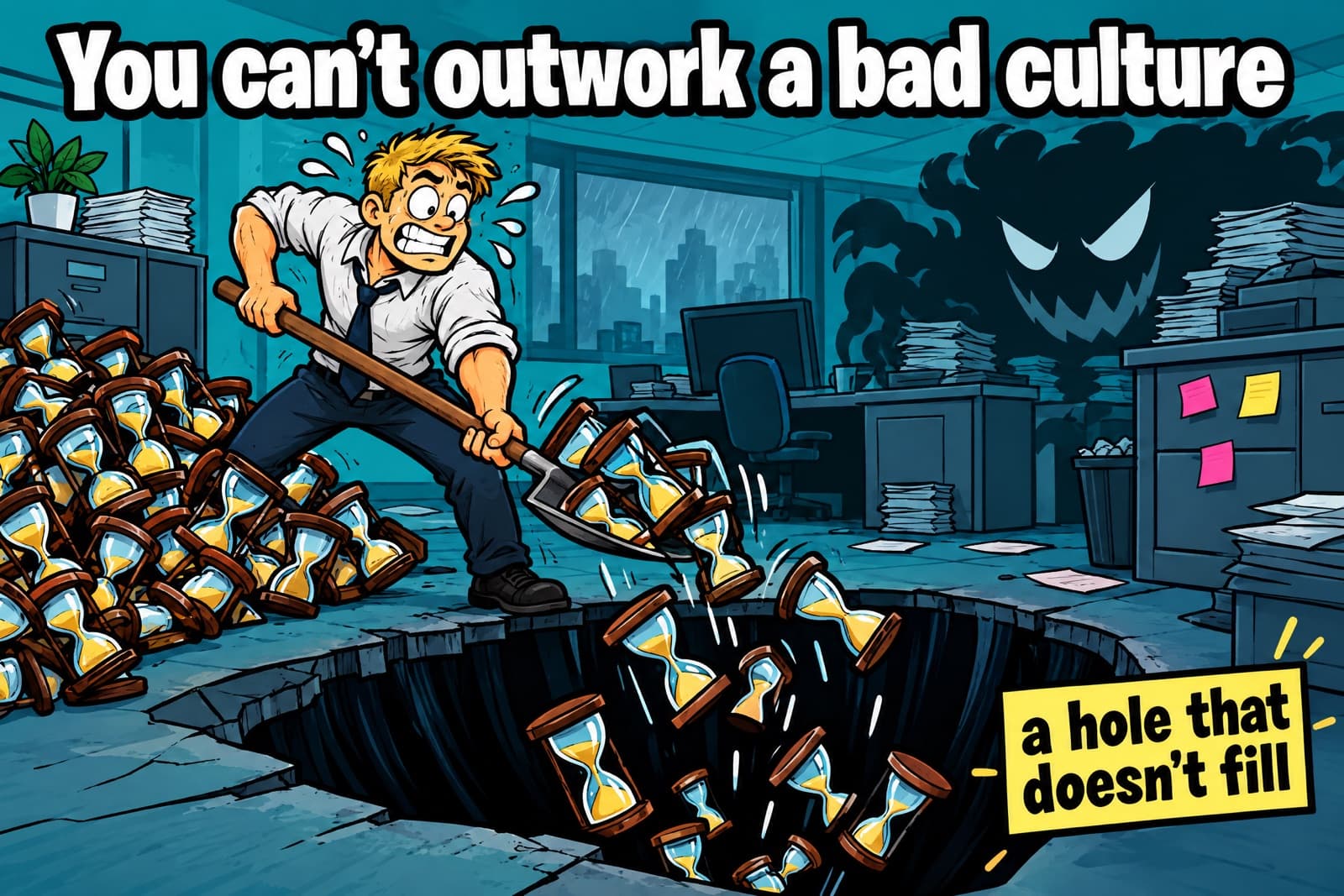
The first instinct in a bad place is to try harder and put in more hours. The question to ask: working harder, but nothing ever changes?
Effort can't fix what leadership won't. If the problem sits in how the place is run, your extra hours go into a hole that doesn't fill. The better move is to name it, out loud, to someone who can change it. If nothing moves after that, leave.
The second lesson follows from the first: culture shapes behaviour. The question: do you like who you're becoming here?
Willpower won't beat culture. You can promise yourself you'll stay calm and curious, and a room full of fear will still wear that down over months. The better move is to change the room, not yourself.
You are not the fix for a system that rewards the wrong things.
Boundaries, and the manager you work for
Lesson three: boundaries are survival tools. The question: when did "just this once" become every day?
It rarely starts big. One late evening, one weekend message, one favour. Then it is the job. No one guards your limits but you. Pick one limit and hold it this week, and notice what happens when you do.
Lesson four: your manager shapes your career more than your company does. The question: is your manager building you, or grinding you down?
A great logo won't fix a bad boss. The brand on your CV matters far less than the person you report to every day, who decides what you work on, what you learn and who sees your work. The better move, next time you move, is to vet the manager first.
The company hires you. The manager decides what that hire turns into.
Silence is a signal

Lesson five: fear kills feedback first. The question: when did people here stop telling the truth?
Silence isn't agreement, it's fear. When meetings go smooth and nobody pushes back, it can look like alignment. Often it means people have learned that speaking up costs more than it's worth. Read it as the warning it is.
Lesson six: confidence follows culture. The question: are you worse at your job, or just worn down?
This one is a self-check, and it matters more than it looks. A tough place can make capable people doubt themselves. The answer is to separate the feedback from the feeling. Write down the specific feedback you've actually received. Then write down how you feel about your work. If the two don't match, the feeling may be coming from the room, not from your work.
When the truth stops flowing, your own read on yourself is the next thing to go.
Count what it is costing you
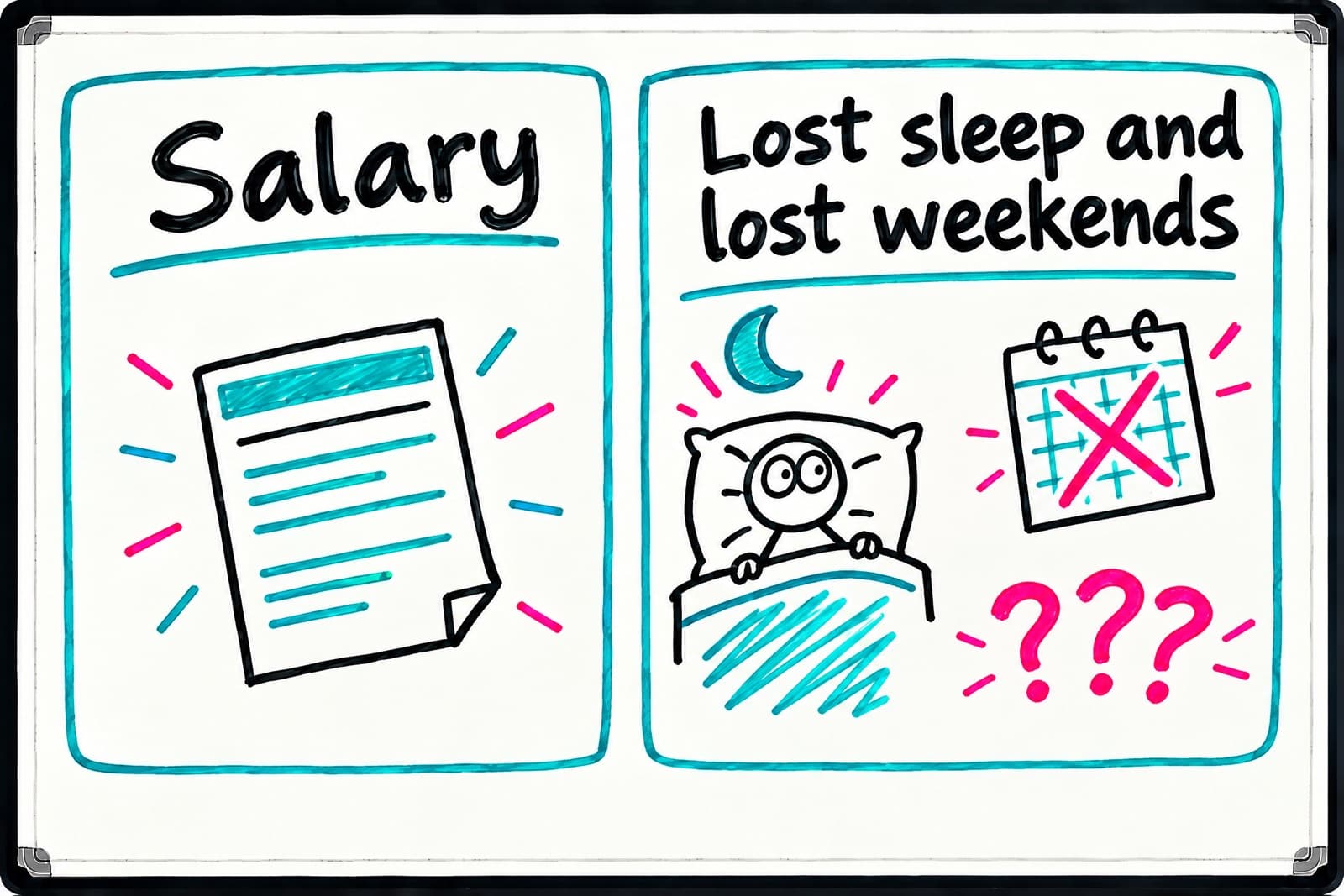
Lesson seven: your health matters more than your salary. The question: what is this job costing your health and time?
Salary is easy to count because it arrives on a payslip. Lost sleep and lost weekends don't show up anywhere. Run that maths before you renew another year.
Lesson eight: loyalty has limits. The question: would they hesitate to replace you?
Loyalty is a trade, not a gift. Give your best work, not your self-abandonment. Being loyal to people and to good work is a strength. Being loyal to a place that would not think twice about you is a cost you're paying alone.
The bill for staying is real even when nobody sends it.
Surviving is not the same as growing

Lesson nine: survival isn't growth. The question: what have you actually learned in six months?
Survival feels like progress. It isn't. Getting through a hard week takes real effort, and that effort can pass for development. It's worth checking. If you can't name the growth, you may be treading water.
Lesson ten: leaving isn't failure. The question: are you choosing to stay, or just scared to leave?
Leaving isn't the failure. Staying out of fear is. Staying can be a good choice when you've looked at it clearly and picked it. The problem is when fear makes the choice for you and you call it patience.
Choosing to stay and being too scared to go look the same from the outside. Only you can tell them apart.
Surviving was never the goal
Put the ten together and they point at one shift, the one that tends to come late.
Surviving was never the goal.
If you're proud you survived it, you stayed too long. Thriving isn't a reward for endurance. It's proof you stopped surviving and started living.
Go back through the ten questions and answer them for where you are right now, not where you hoped to be. You don't need all ten to point the same way. You need to see which ones already do.
Download the one-page version and keep it for the day you need the reminder.