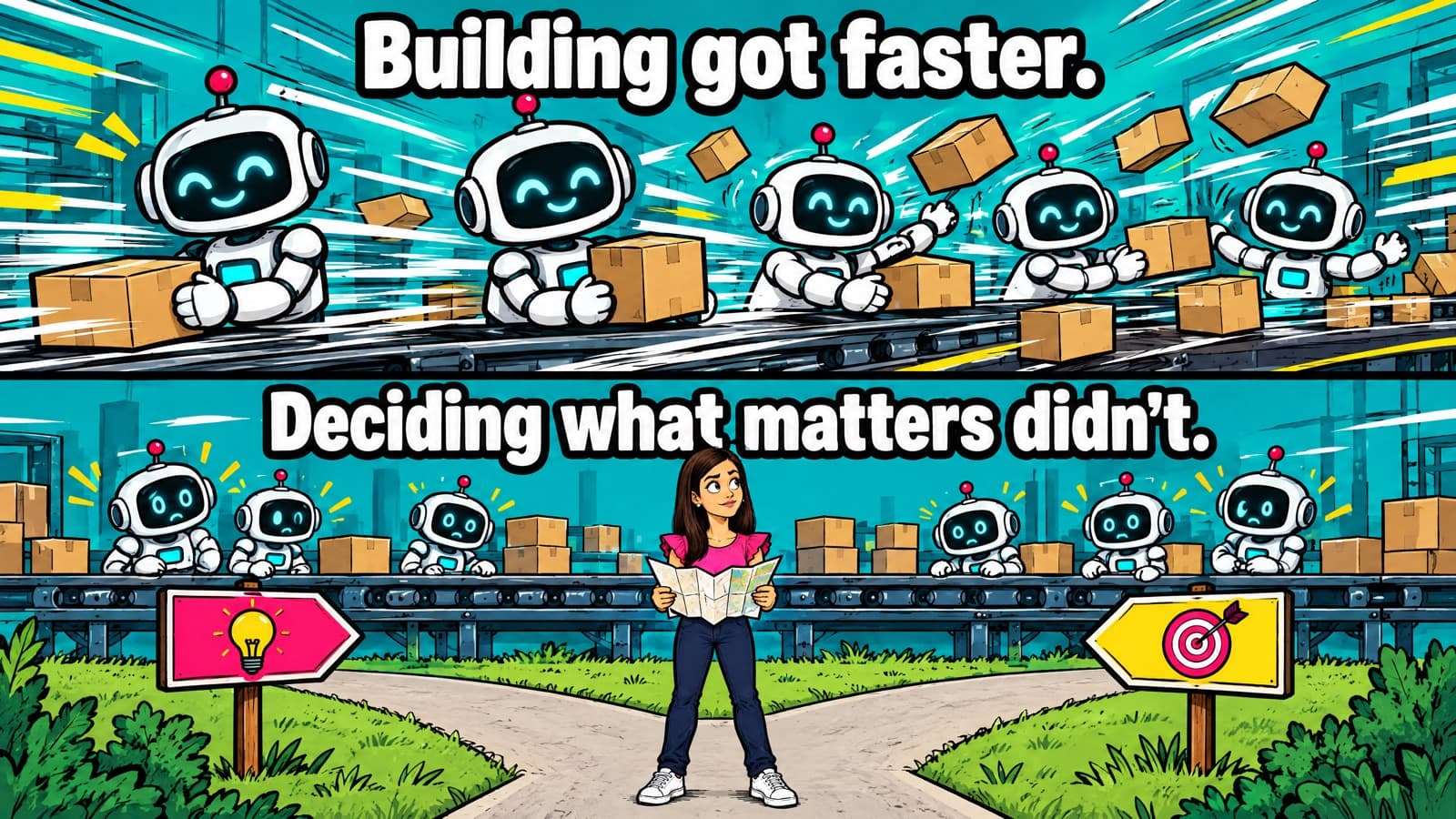
Building got faster. Deciding what matters didn't.
That gap changes the economics of the job. The cheaper it gets to build, the more your judgement is worth, because the expensive mistake is no longer building slowly. It's building the wrong thing quickly. AI tools made the building part faster. They did nothing for the deciding part.
The product managers I see winning are masters of choosing the right problems, quickest to kill the feature early, and excellent at getting people aligned around value. These 16 rules are the ground under those three habits. They're grouped into six themes below, with a practical habit for each.
Solve the problem, not the request
The default is to ship what was asked for. The request is specific, it has a sponsor, and delivering it feels like progress.
Rule 0 says stop shipping and start solving. Rule 1 says stop building what customers ask for. Customers describe the fix they can imagine, which is rarely the best one available. Rule 6 explains why: customers don't hire features, they hire outcomes. The feature is only the means.
Rule 9 is the test. If you can't explain the customer value in one sentence, you don't understand it yet. The habit: put the customer value in one sentence before anything gets scoped. If it's hard to explain, it's usually hard to justify.
A request tells you where the pain is. It rarely tells you what to build.
Own the decision, not the delivery
The default is to measure a product manager by what the team delivers. Tickets closed, dates hit, releases out.
Rule 2 turns that around: product managers own decisions, not delivery. Delivery belongs to the team. The product manager's job is making sure the right things get decided, clearly, by the right person. Rule 11 adds that influence is your unfair advantage, so use it. You rarely have authority over the people who build, fund or sell the product. Influence is how decisions get made anyway.
Rule 15 finishes the theme: great products come from empowered teams, not approval chains. Every approval step is a place where a decision waits. The habit: make it clear who owns the decision, not just the delivery. Teams move faster when the call has an owner.
The call needs a name on it. Otherwise it waits.
Every feature is a bet against something else
The trap is treating each feature on its own merits. Looked at alone, almost everything seems worth doing.
Rule 3 says every feature is a bet against something else. The time spent on one thing is time not spent on another, so every yes carries a hidden cost. Rule 10 names the hard part: the hardest decision is what not to build. Rule 12 says what happens when nobody makes it: if everything is a priority, nothing is.
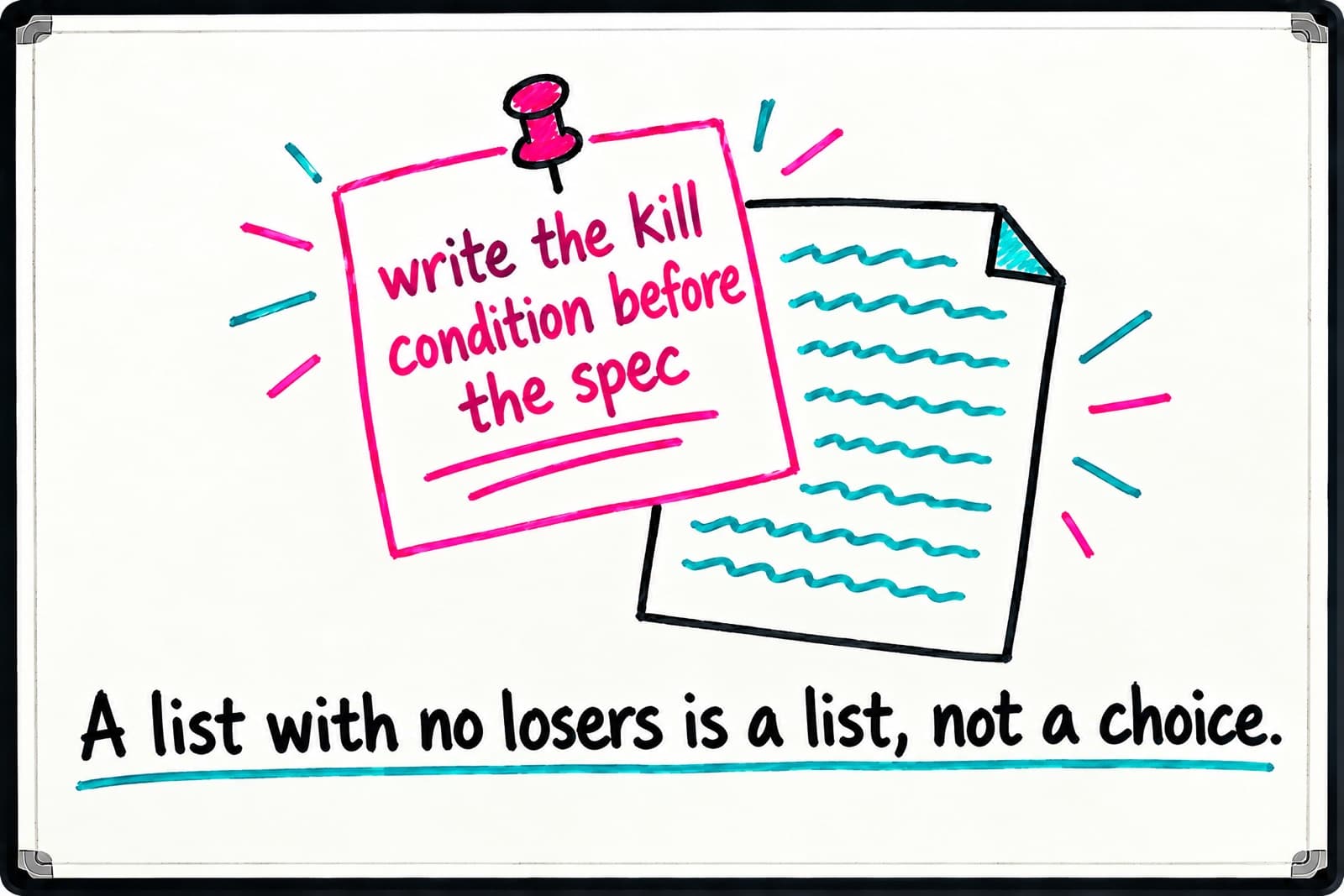
The habit: write the kill condition before the spec. Decide what evidence would make you stop, before you start. A bet with no exit is just a commitment you haven't admitted to yet.
Choosing is the job. A list with no losers is a list, not a choice.
The roadmap is a strategy, not a shopping list

The default roadmap collects requests. Each stakeholder gets something, the quarter fills up, and the document reads like a plan while deciding very little.
Rule 4 says your roadmap is a strategy, not a shopping list. Rule 5 goes further: the best roadmap item is often the one you remove. Taking something off frees the team for the work that matters and tells everyone what the priority really is.
The habit: remove one roadmap item every planning cycle. A roadmap is shaped as much by what you leave off as what you keep.
A plan that cuts nothing hasn't chosen anything.
Learn faster, with evidence
The trap is spending months building on an assumption nobody checked, then defending it because of the time already spent.
Rule 7 says your job is to learn faster than everyone else. Rule 8 says validate assumptions before you waste months. Rule 13 settles the argument: evidence beats opinions. Always. When a decision is contested, the fastest way through is usually to go and find out, not to debate louder.
The kill condition from earlier helps here too. If you wrote down what would make you stop, the evidence has something to be measured against.
Speed of learning is the advantage. Speed of building alone is not.
Measure impact, not activity
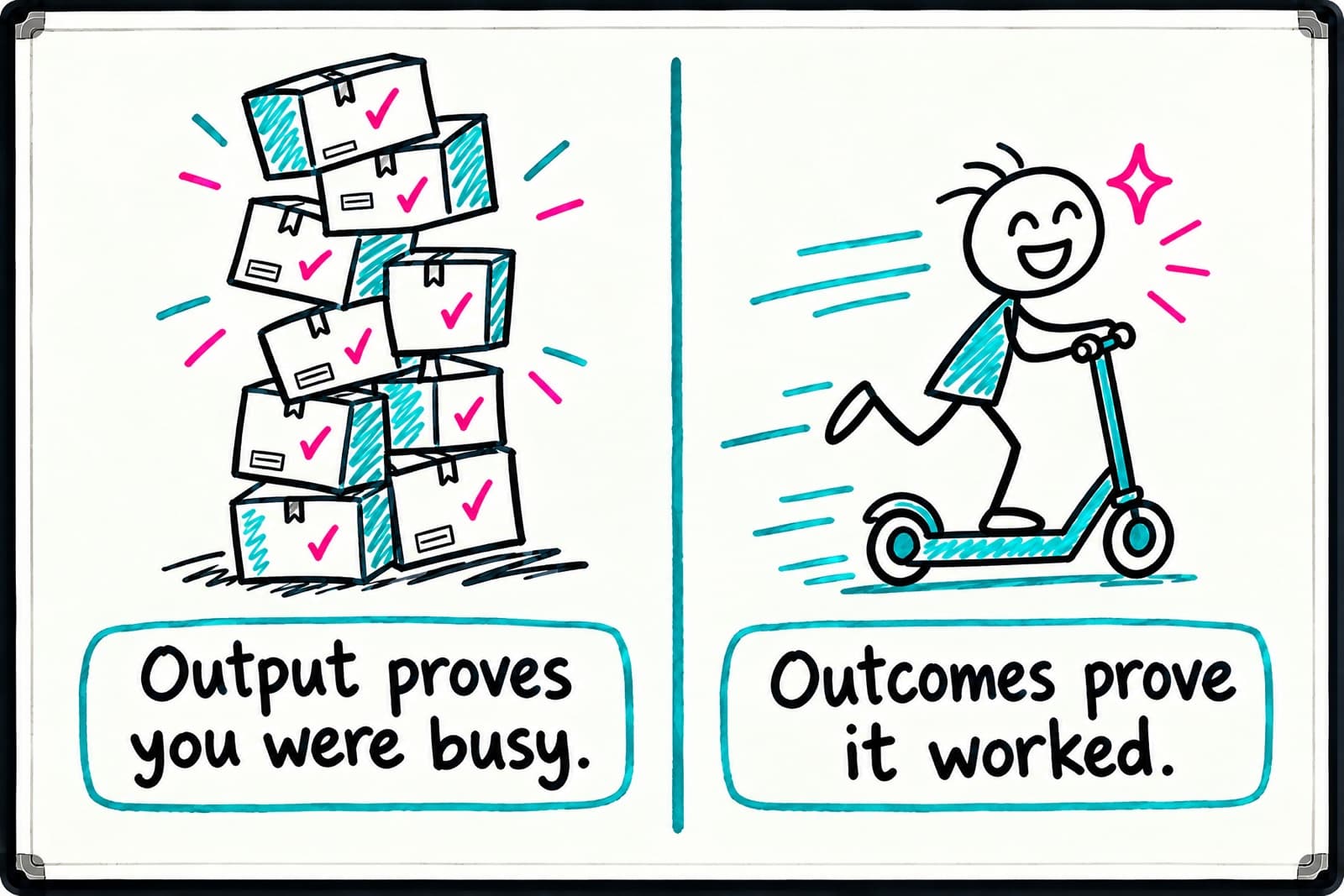
The default is to report what shipped. It's visible, countable and easy to celebrate.
Rule 14 says measure impact, not activity. Output proves you were busy. Outcomes prove it worked. A launch is the cost of the bet, not the result. The result is the change in what customers do.
The habit: track the behaviour you wanted to change, not the features you shipped.
Busy is easy to prove. Impact is the only thing worth proving.
Judgement is what compounds
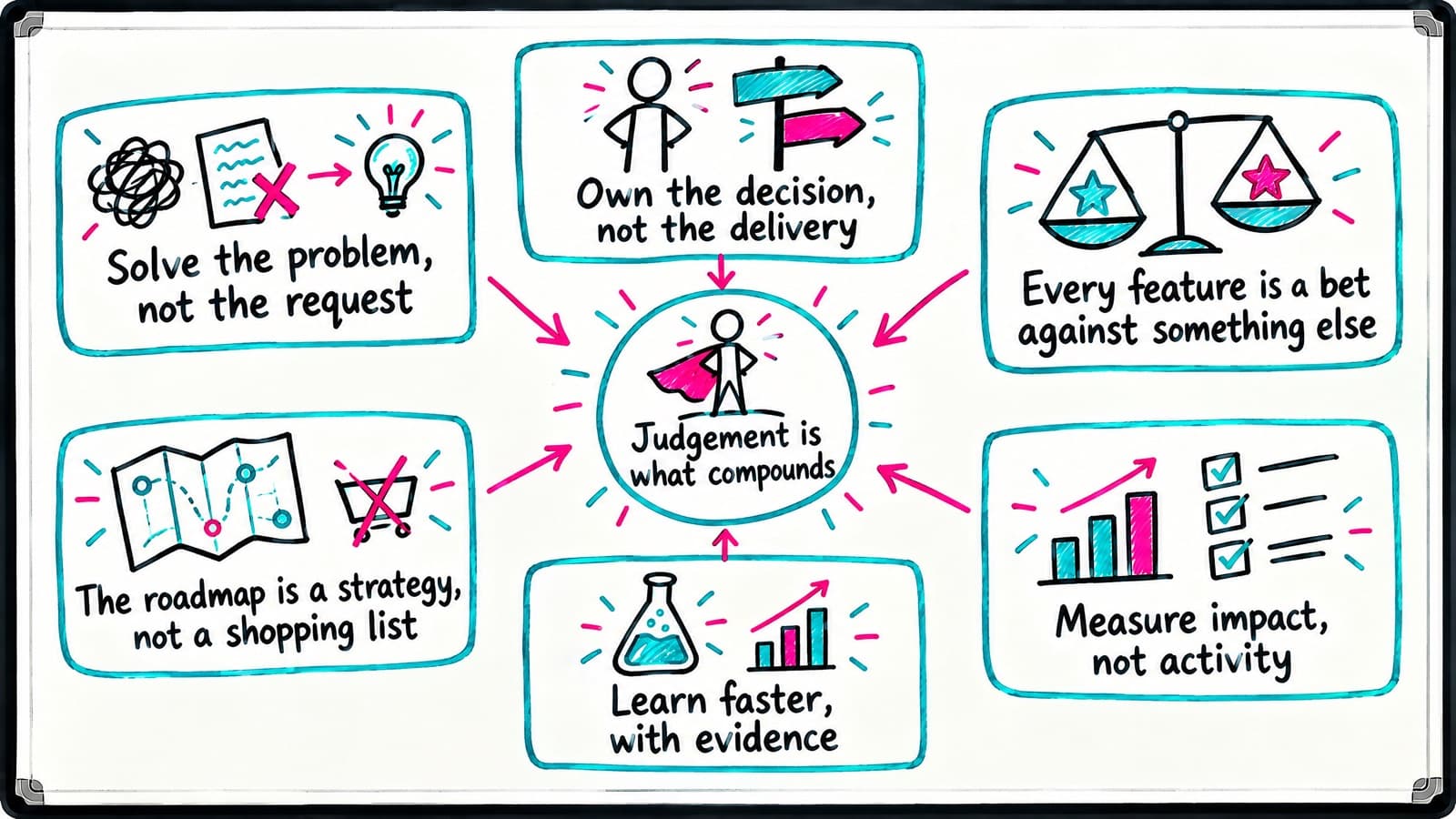
Read the 16 rules together and they describe one skill: choosing well. Choose the problem over the request. Choose who owns the call. Choose what to bet on and what to drop. Choose evidence over opinion. Choose impact over activity.
The tools will keep changing. Building will keep getting cheaper. The judgement behind your decisions is what compounds, and it's the part of the job no tool does for you.
Download the one-page version and keep it where you plan.