Only 5% of company AI projects pay off. To be one of them, start here.
Count the sign-offs between a finished idea and a live customer. That gap is what decides it.
What the MIT research found
MIT looked at 300 company AI rollouts. 95% returned nothing the business could measure. Their own read: it isn't the models. It's everything around them.
That finding changes where to look when an AI programme stalls. If the model isn't the problem, a better model isn't the fix. The answer sits in how the organisation around the model works, and one part of that matters more than most.
Building is the easy part now
Your team can build faster than it ever has. What took a month, AI now does in days. Building is the easy part now.
Which means the slow part moved. A good idea gets built fast, then dies in the approvals before a customer ever sees it.
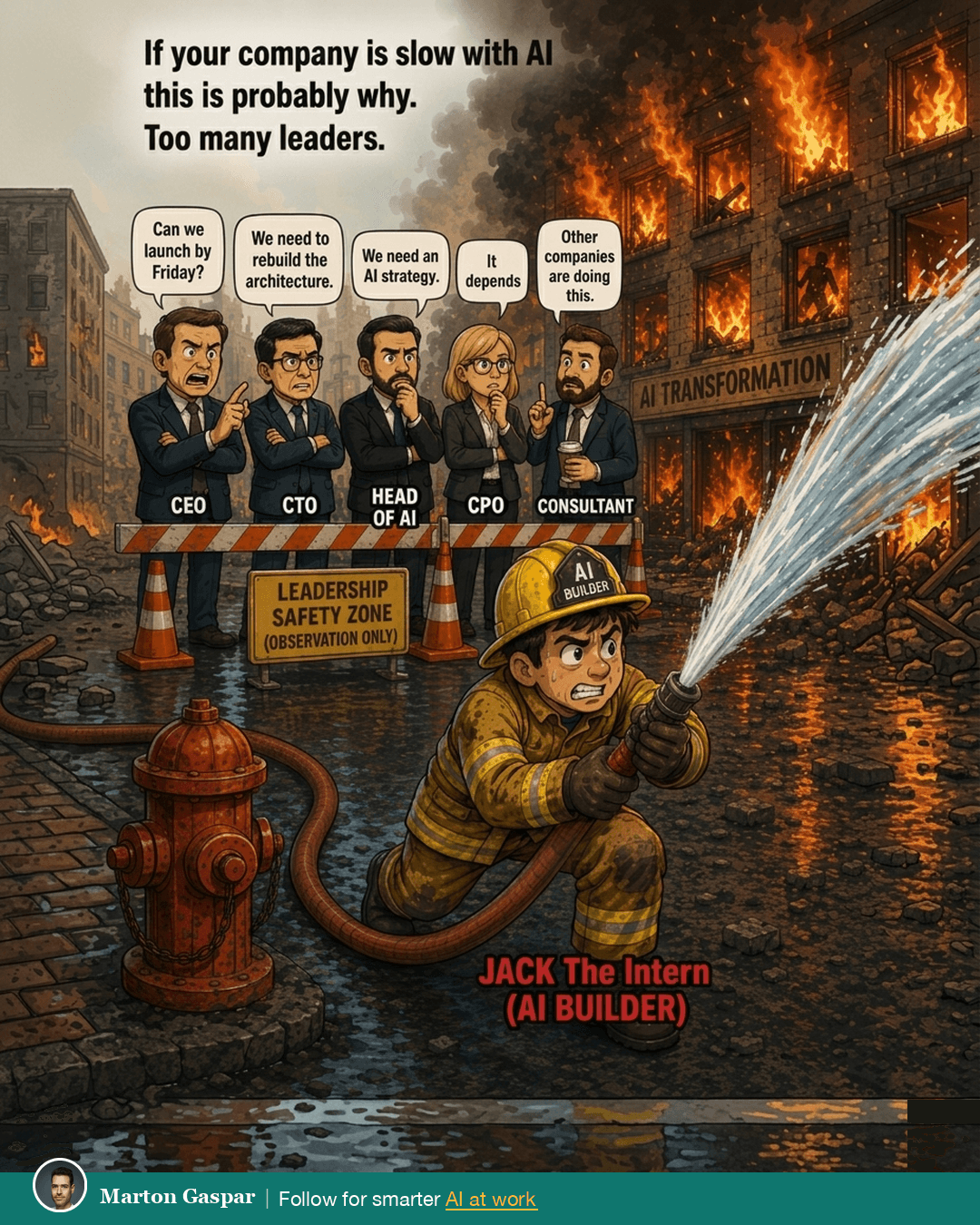
The picture that went with this post makes the point as a cartoon. A burning building is labelled "AI transformation". A row of leaders, the CEO, CTO, Head of AI, CPO and a consultant, stand behind a barrier marked "Leadership safety zone (observation only)", each offering an opinion. One AI builder is doing all the work with the hose. The headline: if your company is slow with AI, this is probably why. Too many leaders.
A two-week build, a year in the approval chain
A year ago I worked with a team stuck right here. They had a good idea: a two-week build that would genuinely change the lives of the people it was for.
Then it hit the approval chain. It had to clear the app team. Then the safety team. Then the team above them both. Then a board.
A year on, it still hasn't shipped. Nobody ever said no.
It was everyone's priority. So it was everyone's approval. So it was no one's call.
The build was never the problem. The deciding was. Tool speed went up. Decision speed stayed flat. And the people that idea was for are still waiting.
Decide who gets to decide
The fix isn't another tool. It's deciding who gets to decide.
Take the calls that don't need you and hand them down with three things.
The outcome you want. Not the solution, the result it should produce, so the person deciding can judge options against it.
The context behind it. The history, constraints and reasons that make the outcome matter, so they don't have to come back to you for them.
Where their decision is final, not yours. This is the part that makes the other two work. Without it, every handed-down decision turns back into an approval request, and the chain grows again.
Do that, and the next good idea ships in weeks, not quarters. That's when your AI spend starts showing up as outcomes your CEO can see, and how you join the 5%.
For more on giving a team what it needs to decide without you, see /vault/every-question-only-you-can-answer.
Count the sign-offs again next month
Start with a count. Take one recent idea and list every sign-off between "finished" and "live with a customer". Then hand down the calls that don't need you, using the three things above.
Then count the sign-offs again next month. If the number hasn't moved, the speed of your tools still isn't reaching your customers.
One more test: what is one decision your team owns now that would have ended up on your desk a year ago? If you can't name one, that is where to begin.