Your Jira board is where good product judgement goes to die.
Not because Jira is bad software. Because of how most teams use it. The board tracks what happened, not why you chose it. Every sprint, the reasoning behind your decisions leaks out of the system, and all that is left is a list of what moved.
AI makes that worse if you let it. The faster you build, the faster the reasoning disappears. But the same AI can protect your judgement instead, if you point it at the right problem.
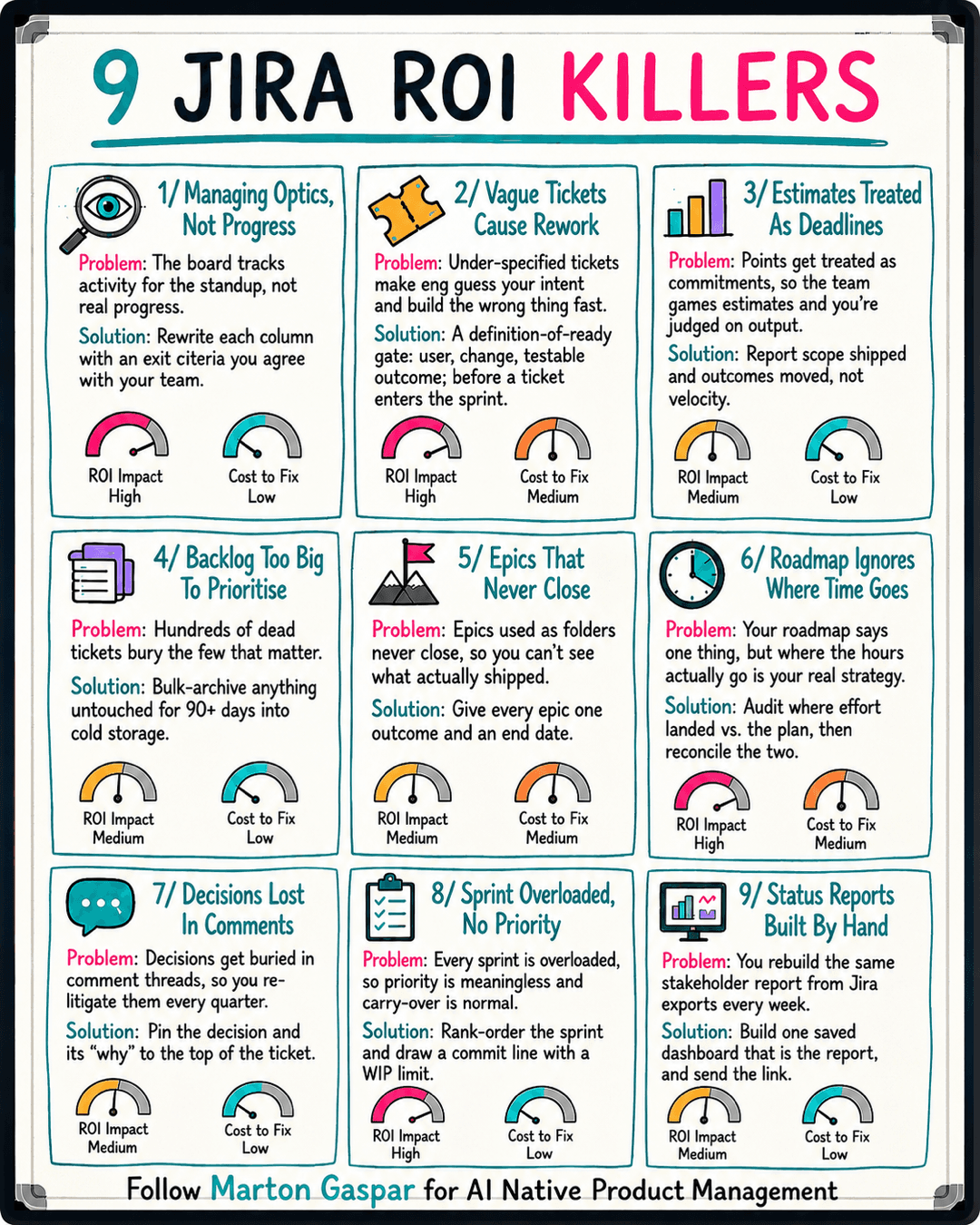
Below are nine ways Jira drains your return on investment, and a specific fix for each. Not every fix needs AI. Start with the problem, then reach for the tool.
1. You manage optics, not progress
The problem: The board tracks activity for the standup, not real progress. Columns fill up, cards move, and none of it tells you whether you are closer to the outcome.
The fix: Write a one-line done rule for each column, an exit criteria you agree with your team. If you want a head start, let Atlassian Intelligence draft those rules from your last 20 shipped tickets. Now the board shows progress, not standup theatre.
2. Your tickets are too vague to build
The problem: Under-specified tickets make engineering guess your intent, so they build the wrong thing fast. Speed on the wrong target is the most expensive kind.
The fix: Add a definition-of-ready gate before a ticket enters the sprint: a user, a change, and a testable outcome. Build a Rovo agent (Jira's built-in AI) to flag any new ticket missing one of the three. Stop paying for the wrong thing, built fast.
3. You treat estimates as deadlines
The problem: Points get treated as commitments, so the team games the estimates and you get judged on output instead of outcomes.
The fix: Report scope shipped and the outcomes it moved, not velocity. Have Atlassian Intelligence rewrite each shipped ticket as the user outcome it moved, and report that. You want to be judged on outcomes, not output.
4. Your backlog is too big to rank
The problem: Hundreds of dead tickets bury the few that matter. Nobody can prioritise a list that long, so nobody does.
The fix: Filter for anything updated more than 90 days ago, bulk-archive the lot into cold storage, then let ChatGPT or Claude cluster what is left into themes. A backlog short enough to rank is a backlog you will actually rank.
5. Your epics never close
The problem: Epics get used as folders and never close, so you cannot see what actually shipped.
The fix: Run a JQL query for epics with no due date (issuetype = Epic AND due is EMPTY). Force a close date on each one or kill it. Now the closed epics are your record of what shipped.
6. Your roadmap ignores where the time goes
The problem: Your roadmap says one thing. Where the hours actually land says another. That second story is your real strategy, and most teams never read it.
The fix: Export last quarter's resolved tickets by epic, drop the CSV into an AI tool, and have it name where the effort really went against the plan. The gap between the roadmap and the effort is the thing to reconcile.
7. Your decisions get lost in the comments
The problem: Decisions get buried in comment threads, so you re-litigate the same call every quarter.
The fix: Use Atlassian Intelligence to summarise each thread down to the decision, then pin the decision and its reason to the ticket description. Decide once, and keep the why on the record.
8. Every sprint is overloaded, so priority means nothing
The problem: Every sprint is overloaded, so priority is meaningless and carry-over is normal. When everything is committed, nothing is.
The fix: Open the velocity report, take the median of your last six sprints, and draw the commit line there. That is your real capacity, not the plan you wish were true. Rank the sprint and draw the line with a work-in-progress limit.
9. You rebuild the same status report by hand every week
The problem: You rebuild the same stakeholder report from Jira exports every week. Hours of your time, gone to copying and pasting.
The fix: Build one Jira dashboard, let Atlassian Intelligence write the JQL, then schedule the filter subscription so it emails itself. Send the link. Those hours go back to product work.
The thread that runs through all nine
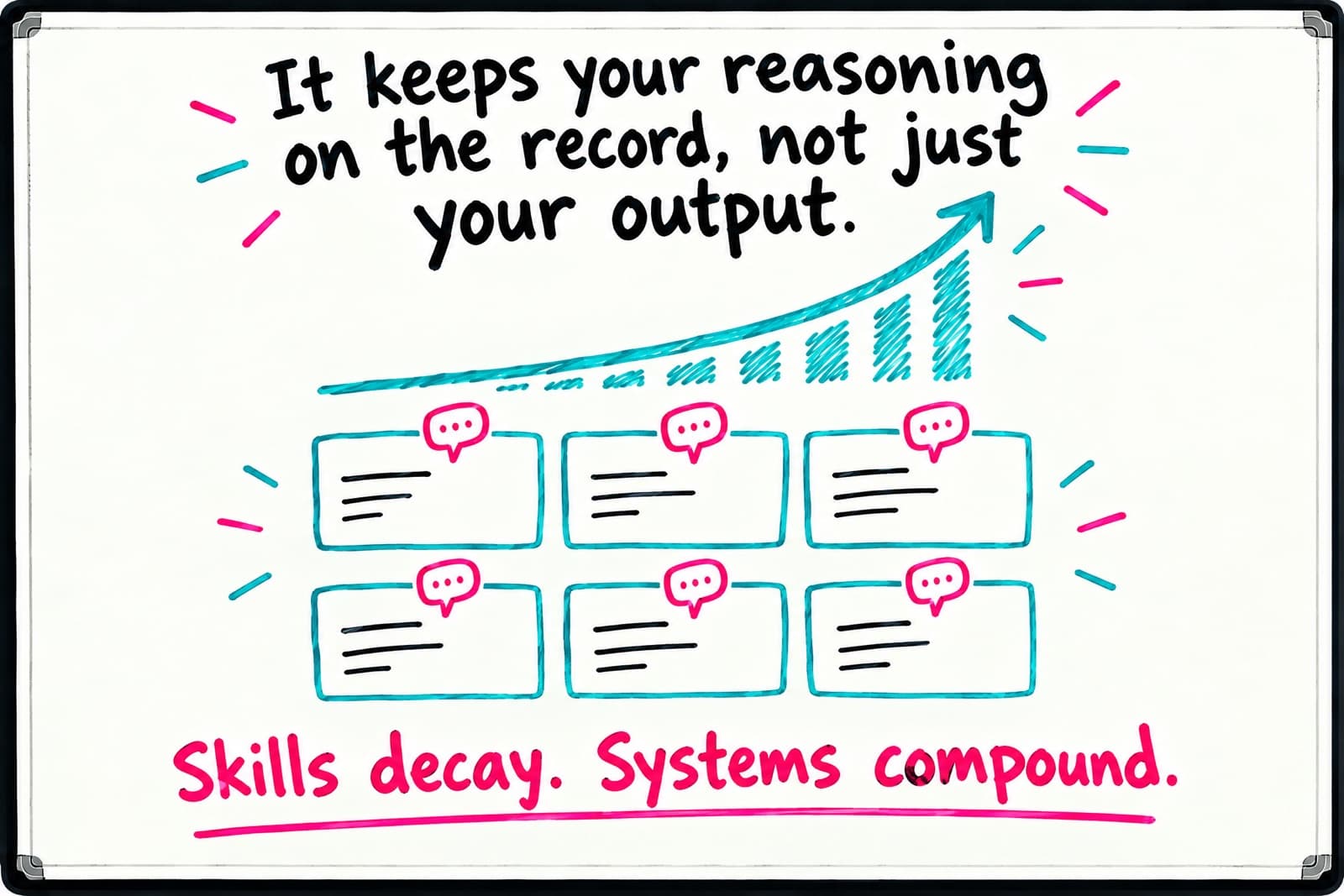
Every fix does the same thing. It keeps your reasoning on the record, not just your output.
That is the point. Once your judgement is written down, in the done rules, the outcomes, the pinned decisions, AI's speed compounds it instead of burying it. Skills decay. Systems compound. A Jira board set up this way is a small compounding system for your product judgement.
Start with the problem in front of you. Reach for the tool second.