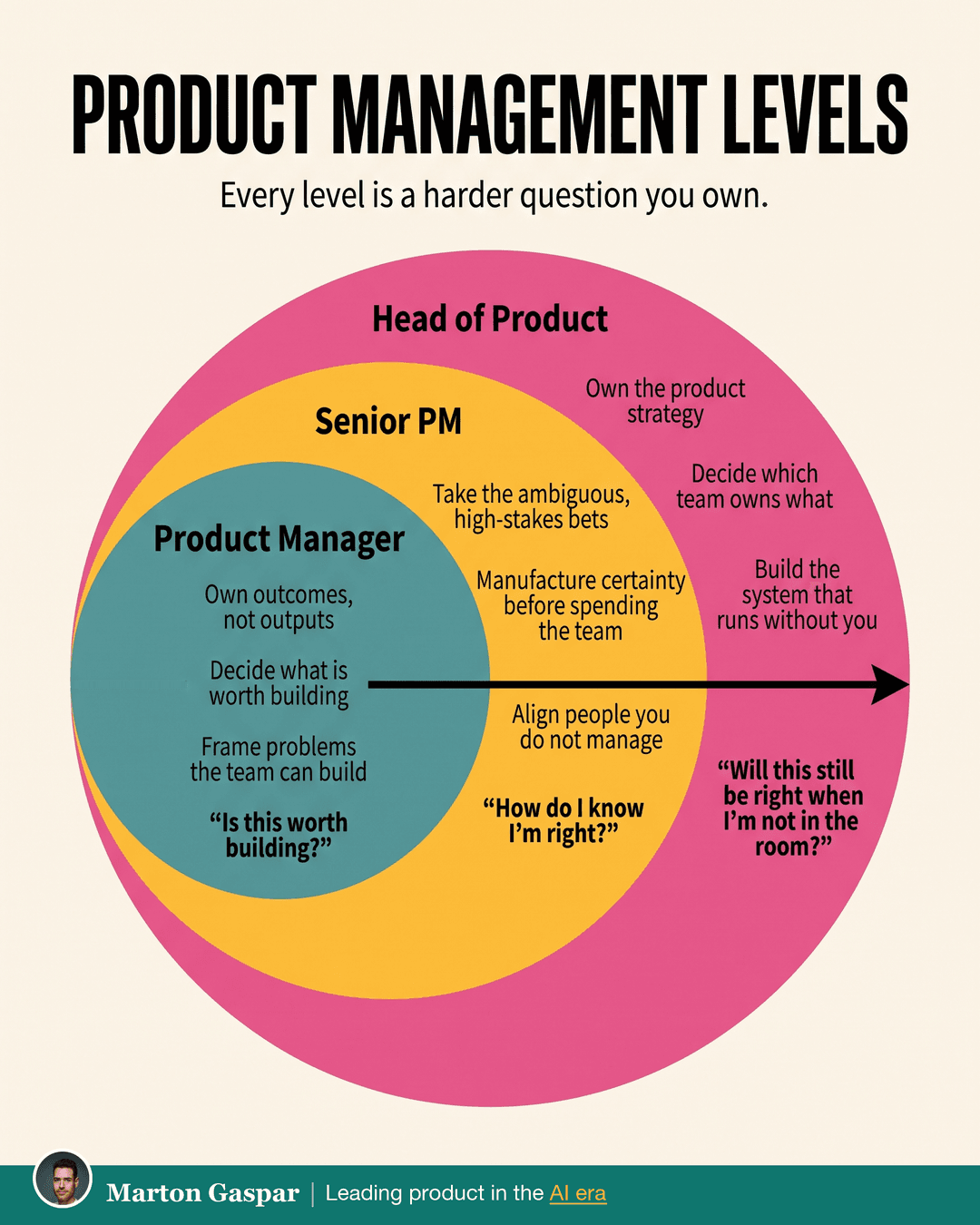
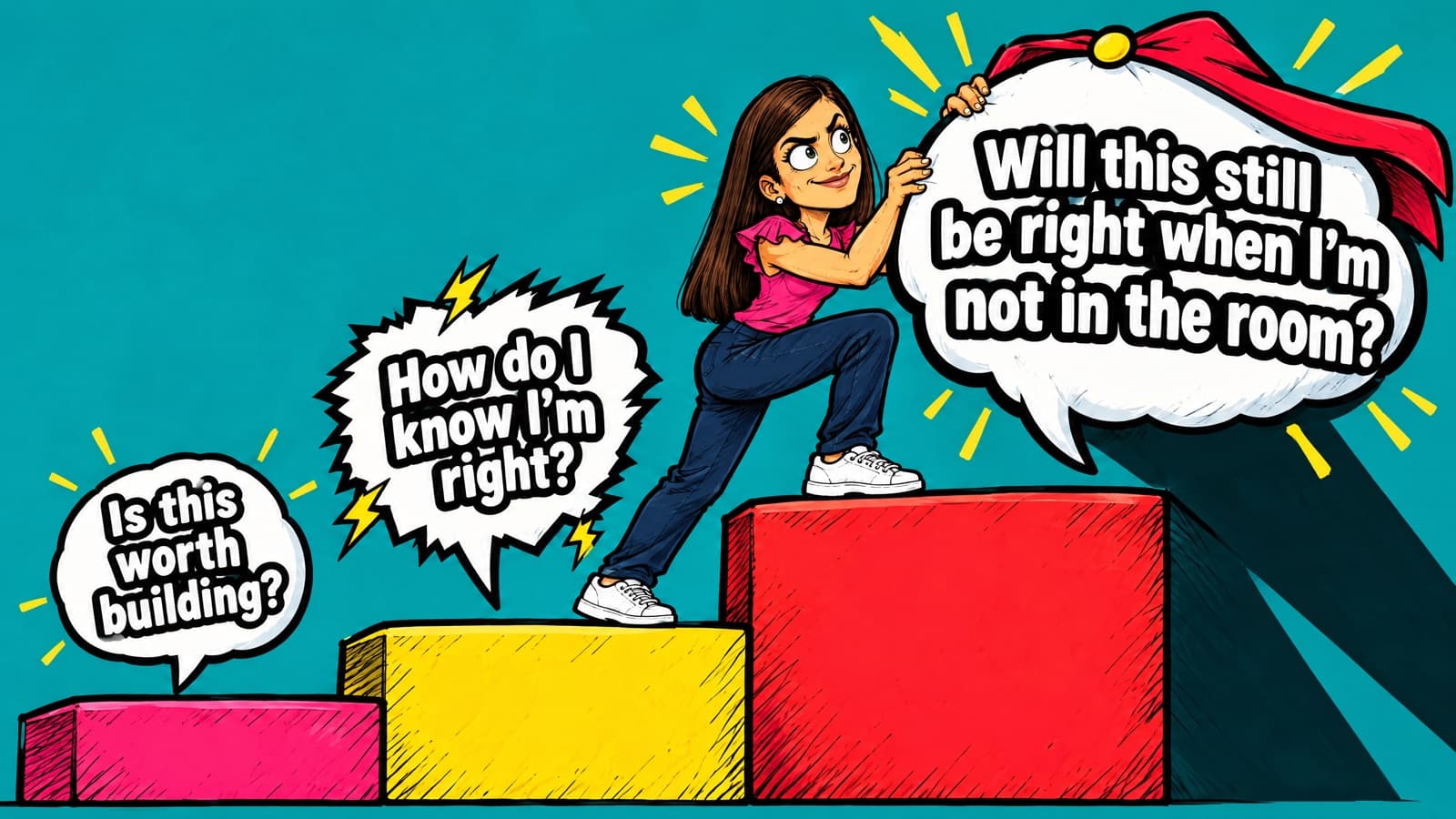
Moving up in product isn't doing more. It's owning a scarier question each time.
Most product career ladders get drawn as a list of responsibilities that keeps growing as you climb. That misses what actually changes. Each level of product management is defined by one question you become accountable for answering. You can usually name the question you answer today. The one a level above you is the question you can't quite see yet, and that blind spot is the whole climb.
Here are the three levels, the question that defines each, and one thing you can do this week to start answering the next one.
Level 1: Product manager. Is this worth building?
The first level is about owning the outcome, not the output. A shipped feature is not the win. A changed behaviour for the user is. The product manager who only counts what got built is measuring the wrong thing, and it shows up later as a roadmap full of things nobody uses.
The move: before you build, write down what changes for the user if this works. Be specific about the behaviour, not the feature. If you can't name a change, or nothing really changes, it isn't worth building yet.
Level 2: Senior PM. How do I know I'm right?
At the senior level, being right stops being enough. Your calls now cost other people weeks of work, and those people don't report to you. A confident opinion that turns out wrong is expensive in a way it never was when you were only spending your own time. So the question shifts from "what do I think" to "how do I know."
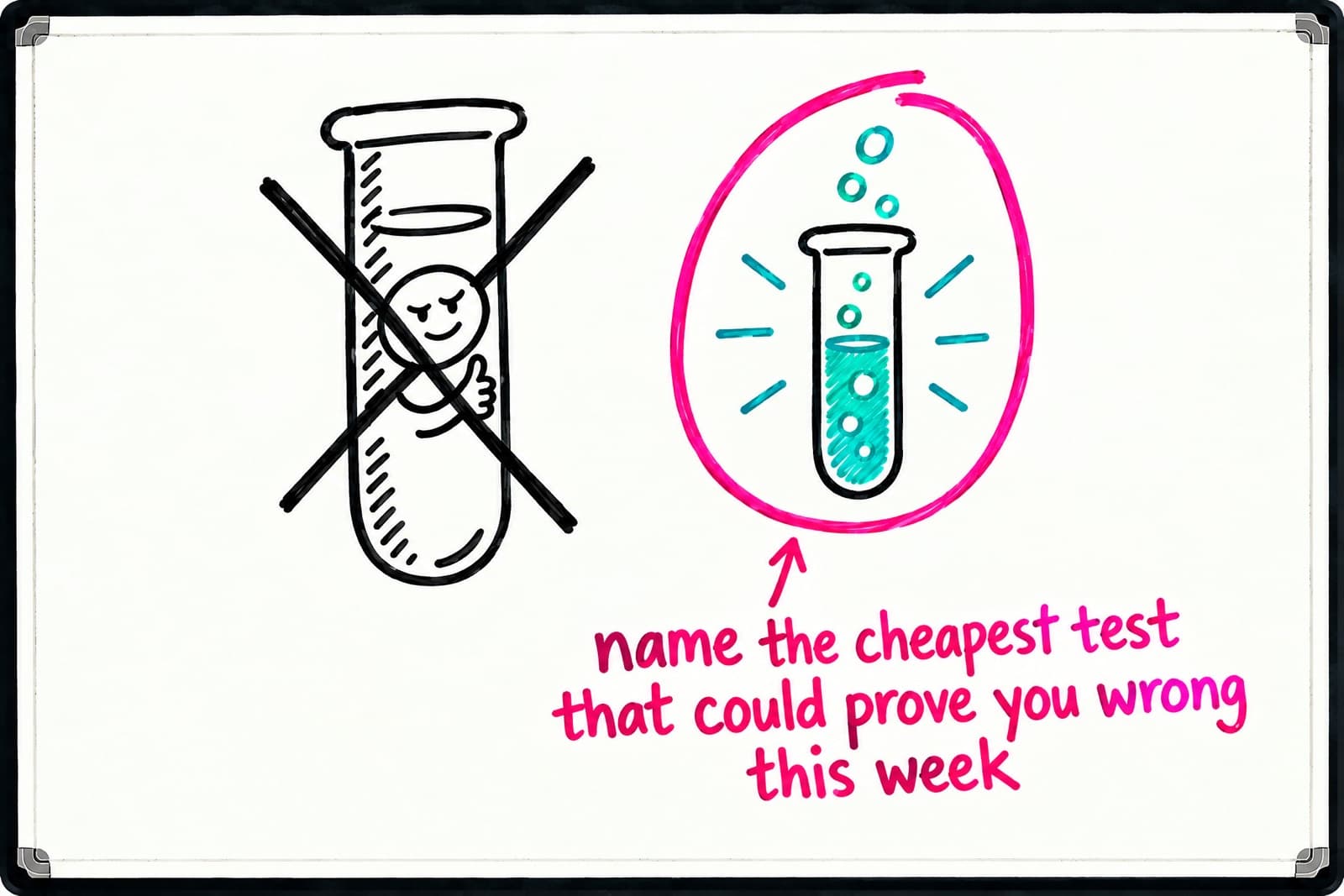
The move: name the cheapest test that could prove you wrong this week. Not the test that confirms you, the one that could kill the idea. Run it before the team builds anything. Manufacturing that certainty, through a quick experiment, a few user conversations, or a look at the data you already have, is the craft that separates a senior PM from a fast one.
Level 3: Head of product. Will this still be right when I'm not in the room?
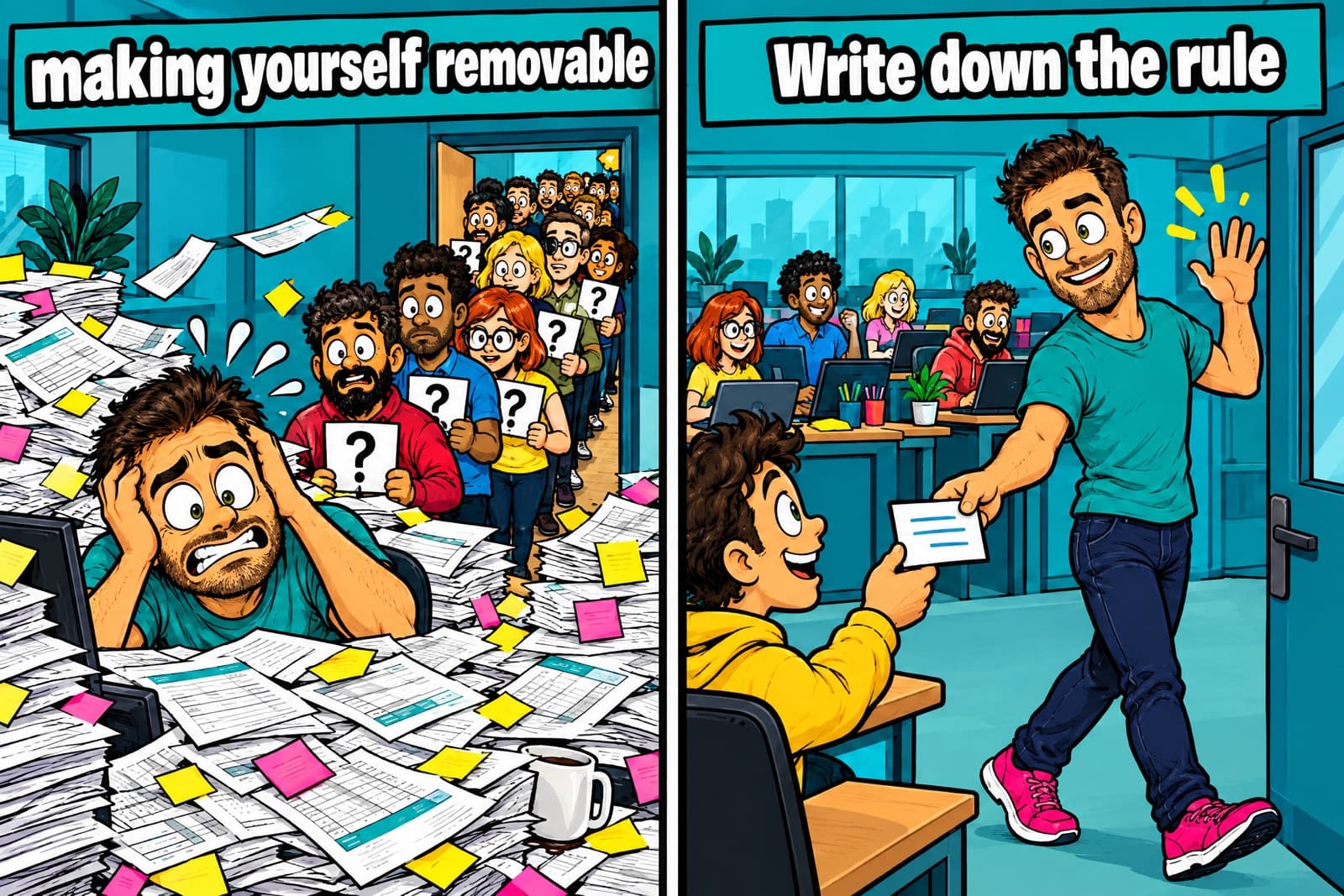
The top level is a different job again. It becomes about making yourself removable. If every good decision needs you in the room, you have built a bottleneck, not a team. The head of product who is proud of being needed for everything has capped the whole function at their own calendar.
The move: take one decision you keep getting pulled into. Write down the rule or the principle you'd use to make it. Hand that rule to the person closest to the work, and then stay out of the next one. You'll learn fast whether the rule was any good, and whether the team can carry it without you.
Every level still contains the one below it
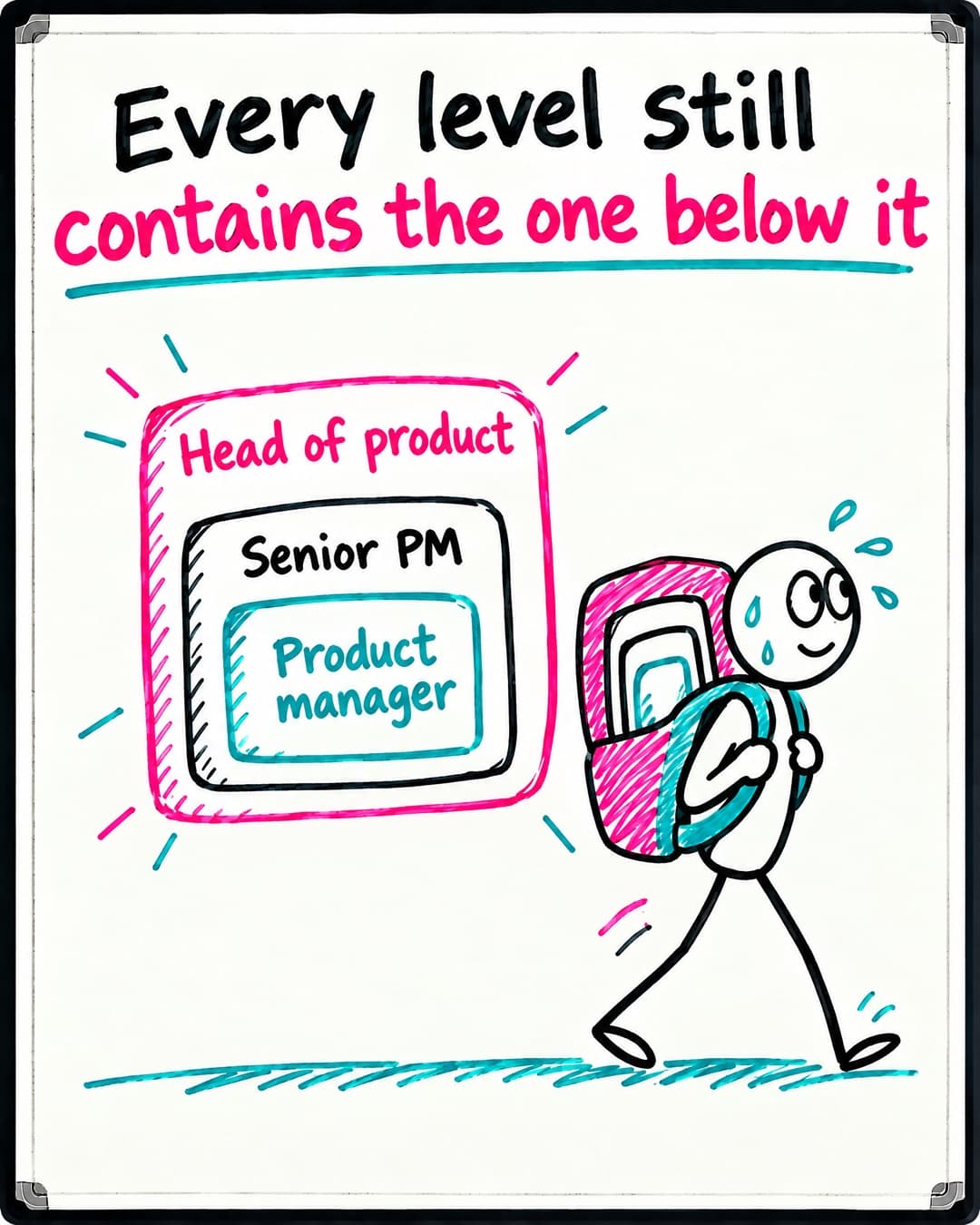
The trap is reading this as a staircase you walk up and leave behind. It isn't. You never drop the earlier questions. A head of product still asks "is this worth building" and "how do I know I'm right." You answer all three at once now, which is exactly why the job gets heavier as you climb, not lighter.
So your title isn't your level. The question you can answer with confidence is. Skills and tactics decay as tools and teams change. The habit of owning a harder question, and building the system that keeps answering it, is what compounds. That is the real climb, and it is the same whether you carry the title yet or not.
The question to sit with: which of the three can you answer with confidence today, and which one is next?