Most PMs who get promoted to director hit the same wall. Their title changed. Their calendar didn't.
I saw it in almost every leader I've coached. There is a difference between making decisions and being the person every decision waits for. A new director often keeps doing the second, because it is what got them promoted. The work still routes through them, the approvals still stack up, and the team still waits.
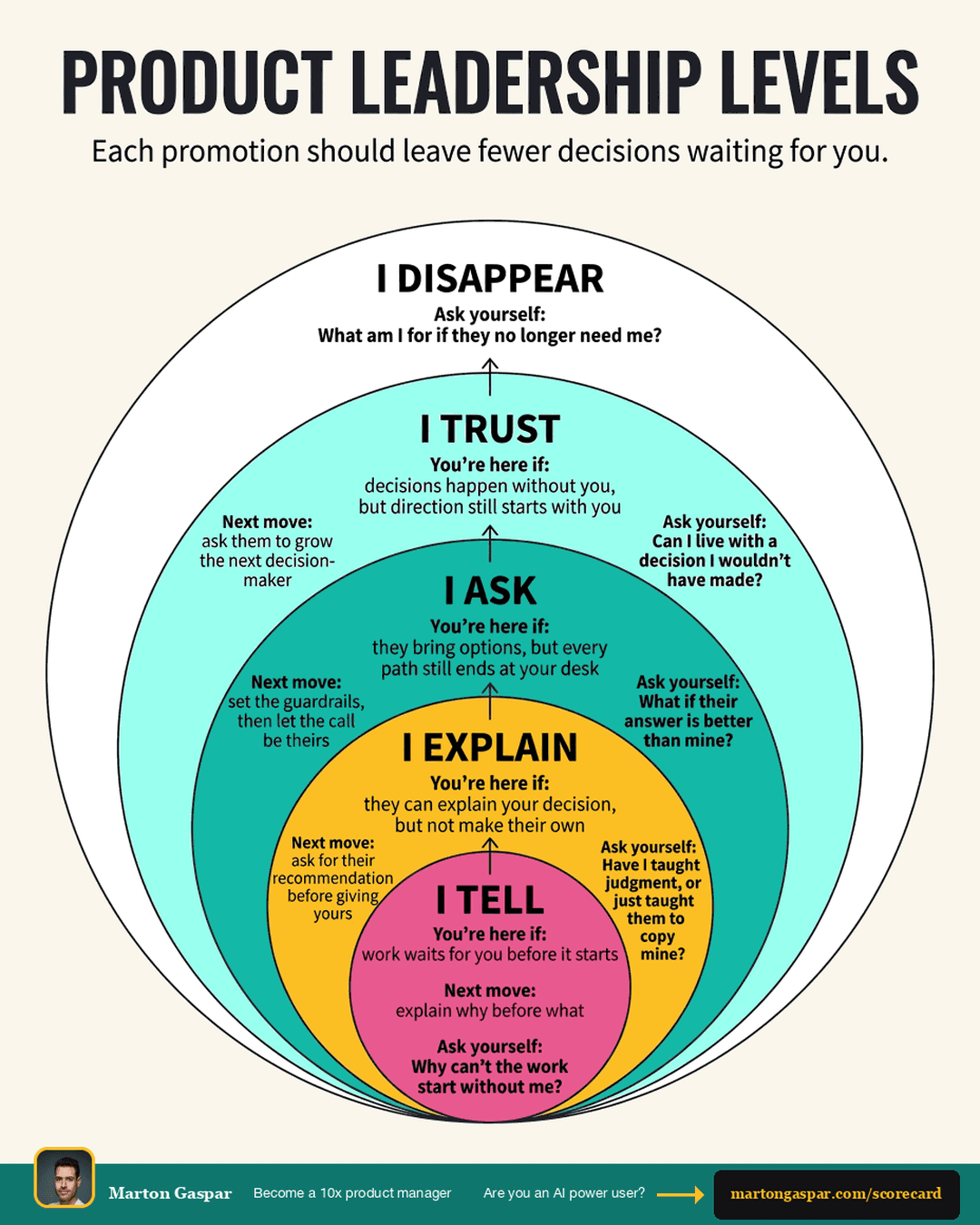
The infographic for this piece shows five levels, each one a ring around the last. Each promotion should leave fewer decisions waiting for you. Here is the ladder I walk leaders up, what each level looks like and one move you can run this week.
One thing to keep in mind as you read: the levels are not about doing less. Each one asks for a different kind of work. You stop doing the deciding and start building the people and the guardrails that make good decisions possible without you.
Level one: I tell
You're here if work waits for you before it starts.
The question to ask yourself is: why can't the work start without me? At this level the team has tasks but not reasons. They do what they are told because they don't know enough to do anything else.
The next move is to explain why before what. This week, at your next handoff, give the reason before the task. Once people know why a piece of work matters, they can start making the small calls inside it without checking back.
Level two: I explain
You're here if they can explain your decision, but not make their own.
The question to ask yourself is: have I taught judgement, or just taught them to copy mine? Explaining is progress, but a team that can only repeat your reasoning still needs you for every new situation.
The next move is to ask for their recommendation before giving yours. At your next 1:1, ask "what would you do?" before you answer.
Level three: I ask
You're here if they bring options, but every path still ends at your desk.
The question to ask yourself is: what if their answer is better than mine? Options are a good sign. They mean the team is thinking. But if you still pick every time, the decision still waits for you.
The next move is to set the guardrails, then let the call be theirs. Name the two lines they can't cross. Everything inside them is their call. Two lines is enough. More than that and you are back to approving every option, just in advance.
Level four: I trust
You're here if decisions happen without you, but direction still starts with you.
The question to ask yourself is: can I live with a decision I wouldn't have made? The team will make calls that look different from yours. Some will be better, some worse, most just different. Reviewing a decision after it is made, rather than before, is what turns those calls into learning instead of a queue.
The next move is to ask them to grow the next decision-maker. This week, hand over one decision you still own. Review it after, never before.
Level five: I disappear
The question at the top is the hardest one: what am I for if they no longer need me?
A level five leader still tells, still explains, still asks. They just stopped being the thing it all waits for.
The move here is to skip a week of approvals on purpose. Whatever survives never needed you. Whatever doesn't survive tells you exactly which level to work on next.
The fear is the real wall
The skill to get to level five is rarely the problem. The fear is, and it escalates.
First: "the work will be wrong without me." Then: "their answer won't look like mine." Finally: "they may not need me at all."
Each fear lines up with a step on the ladder. The first keeps leaders at I tell. The second keeps them at I explain and I ask, where the team does the thinking but the choice still comes back. The third is the one that sits between I trust and I disappear.
That last one keeps good leaders stuck for years. No promotion gets you to level five. Only what happens without you does.
Your title can change overnight. What still waits for you shows your real level.
So count what's parked on your desk waiting for your yes. That count is your answer.
If you want to see where the same pattern starts earlier in a product career, Product Management Levels (/vault/pm-levels) covers the question you own at each stage. And if you want to find where you stand more broadly, the scorecard is at martongaspar.com/scorecard.