It's tempting to keep your best people with perks or money.
But your best employees stay for something money can't buy. Meaningful work.
And meaningful work isn't a perk. It's the result of good decisions you can make.
Perks don't buy what your best people want
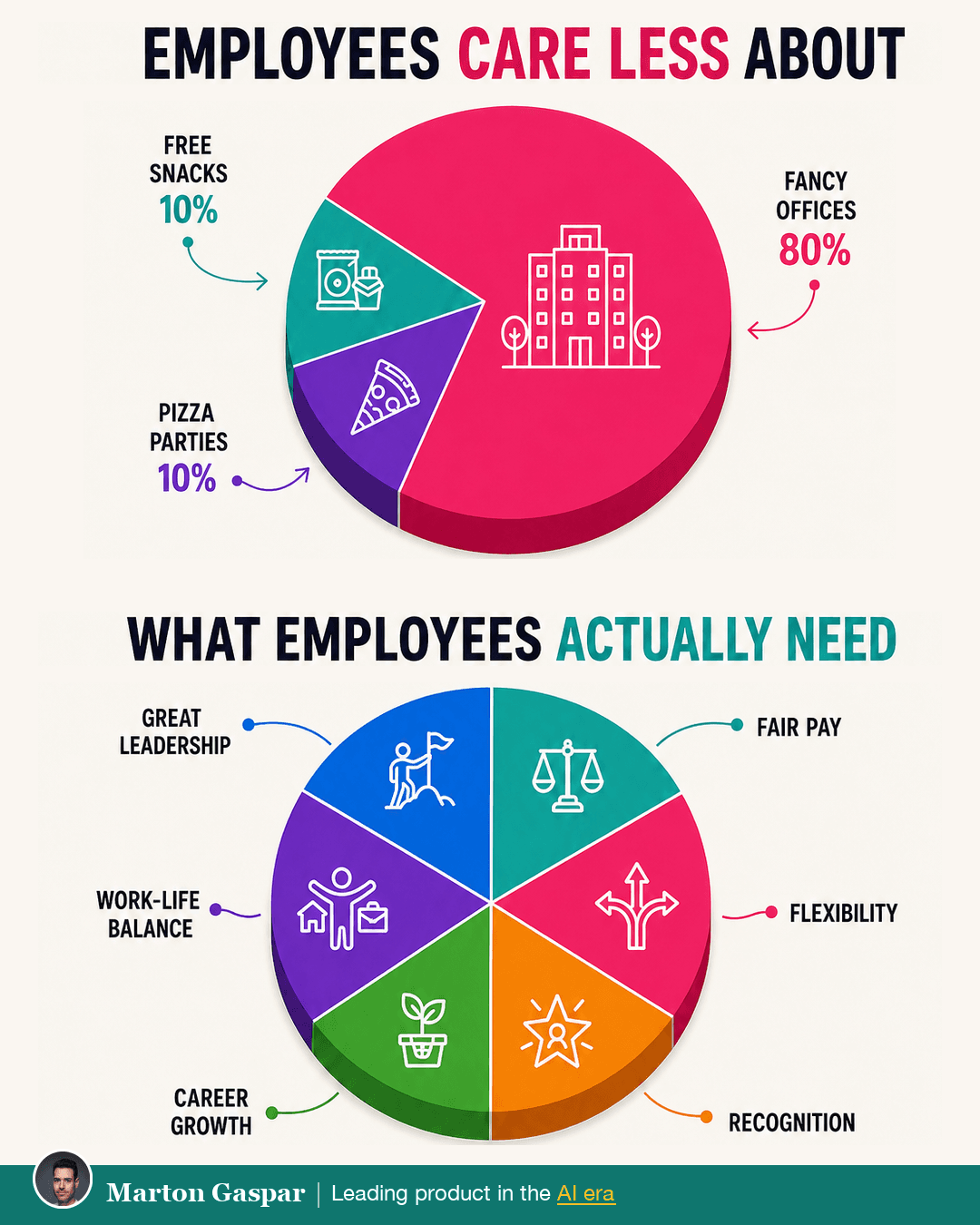
The infographic that went with this post makes the point in two pies. The first shows what employees care less about: free snacks, pizza parties and fancy offices. The second shows what employees actually need: great leadership, fair pay, work-life balance, flexibility, career growth and recognition.
Fair pay is on that second list, so pay matters. But pay and perks are the floor, not the reason someone stays when another offer arrives. What keeps them is the work itself.
Meaningful work is designed, not bought
Meaningful work is built on three things: autonomy, mastery and purpose.
None of them come from a budget. They come from how you design the work. That puts them within reach of any leader, including one with no spare money to spend.
Three design moves for autonomy, mastery and purpose
Autonomy: hand them the problem and the decision, not just the task. A task tells someone what to do. A problem with the decision attached tells them you trust their judgement. The second is the one people remember.
Mastery: give them harder problems and honest feedback, so they keep getting better. Strong people notice when they've stopped growing. A stretch problem plus clear feedback on how they handled it is the clearest signal that the job still has room for them.
Purpose: tie their work to an outcome they can watch move. Work that disappears into a backlog feels like output. Work connected to a number or a customer behaviour that changes feels like it mattered.
Remove work to add meaning
The fastest way to create more meaning isn't adding work. It's removing work that no longer matters.
Every quarter, pick one recurring meeting, report, process or approval and kill it completely. Not trim it, not move it to a different day. Remove it.
Every piece of work that has outlived its purpose takes time and attention away from the work that still has one. Removing it gives your best people their time back, and tells them you take their time seriously.
Give them a problem worth solving
The best people don't just want support. They want a problem worth solving.
Give them one. They stop feeling like they're completing tasks. They feel like they're solving problems that matter. And that's a lot harder to walk away from.
If you could only improve one of the three this quarter, autonomy, mastery or purpose, which would it be? Start there, and pick the one meeting, report, process or approval to remove at your next planning session.